A Division of The Hoskin Group. Canada’s Instrumentation Leader 


Every industrial facility in Canada that releases substances to air operates within a layered system of federal, provincial, and territorial requirements, and at the centre of that system sits the Canadian Environmental Protection Act, 1999 (CEPA 1999). Understanding how CEPA regulations apply to your operation, what must be reported through the National Pollutant Release Inventory (NPRI), and how provincial frameworks interact with federal rules is essential knowledge for plant managers, environmental coordinators, and compliance officers. This guide offers a plain-language overview of industrial emissions regulations in Canada and the role monitoring instrumentation plays in demonstrating compliance. It is part of our complete continuous emissions monitoring systems (CEMS) compliance guide, which covers the measurement technologies behind the data regulators expect to see.
A note before we begin: this article is general guidance, not legal advice. Requirements, thresholds, and reporting deadlines change over time and vary by jurisdiction, substance, and sector. Always verify your current obligations directly with Environment and Climate Change Canada (ECCC) and your provincial regulator.
The Canadian Environmental Protection Act, 1999 is the cornerstone of federal environmental law in Canada. Administered primarily by Environment and Climate Change Canada, in partnership with Health Canada, CEPA 1999 gives the federal government authority to assess substances and manage those that may pose risks to the environment or human health. Substances found to meet the Act’s criteria for toxicity can be added to its List of Toxic Substances, which opens the door to a range of risk-management instruments.
In practice, “CEPA regulations” is shorthand for a family of instruments rather than a single rulebook. Depending on the substance and sector, federal risk management may take the form of:
Each instrument has its own scope, applicability criteria, and compliance mechanism, so the first step in any compliance program is identifying which instruments apply to your facility’s substances, processes, and sector. ECCC publishes the current list of instruments and their status, and that listing should be your authoritative reference.
The National Pollutant Release Inventory is Canada’s legislated, publicly accessible inventory of pollutant releases to air, water, and land, along with disposals and transfers for recycling. Established under CEPA 1999 and administered by ECCC, the NPRI requires facilities that meet substance-specific reporting criteria, generally tied to quantities manufactured, processed, or otherwise used, together with employee-hour thresholds, to report annually. Three features of NPRI reporting matter most to facility operators:
Substance lists, thresholds, and reporting requirements are reviewed and updated periodically, so consult ECCC’s current NPRI guidance each reporting cycle rather than relying on a previous year’s determination.
Federal instruments under CEPA 1999 do not replace provincial requirements; they sit alongside them. Day-to-day operating limits for most industrial facilities in Canada are set in provincial or territorial permits and approvals. Ontario issues Environmental Compliance Approvals, Alberta approves facilities under its provincial environmental legislation, Quebec and British Columbia administer their own air quality regulations and permits, and every jurisdiction can impose facility-specific emission limits, stack testing schedules, continuous monitoring obligations, and reporting requirements that go beyond federal rules. The practical consequence is that most facilities must satisfy several layers at once.
| Regulatory layer | Administered by | Typical obligations | Role of monitoring data |
|---|---|---|---|
| Federal (CEPA 1999) | ECCC, with Health Canada | Substance risk management, national regulations, P2 planning notices, NPRI reporting | Supports NPRI estimates and demonstrates conformity with federal instruments |
| Provincial / territorial | Provincial ministries and regulators | Operating approvals and permits, facility emission limits, stack testing, local air rules | Demonstrates ongoing compliance with permit limits, often via CEMS or periodic testing |
| Municipal / regional (where applicable) | Local authorities | Nuisance bylaws, odour and dust provisions, local air programs | Ambient and fenceline data support complaint response and community relations |
Where federal and provincial rules address the same emissions, harmonization mechanisms may apply in some jurisdictions, but you should never assume one layer satisfies the other. Confirm your obligations with both ECCC and your provincial authority.
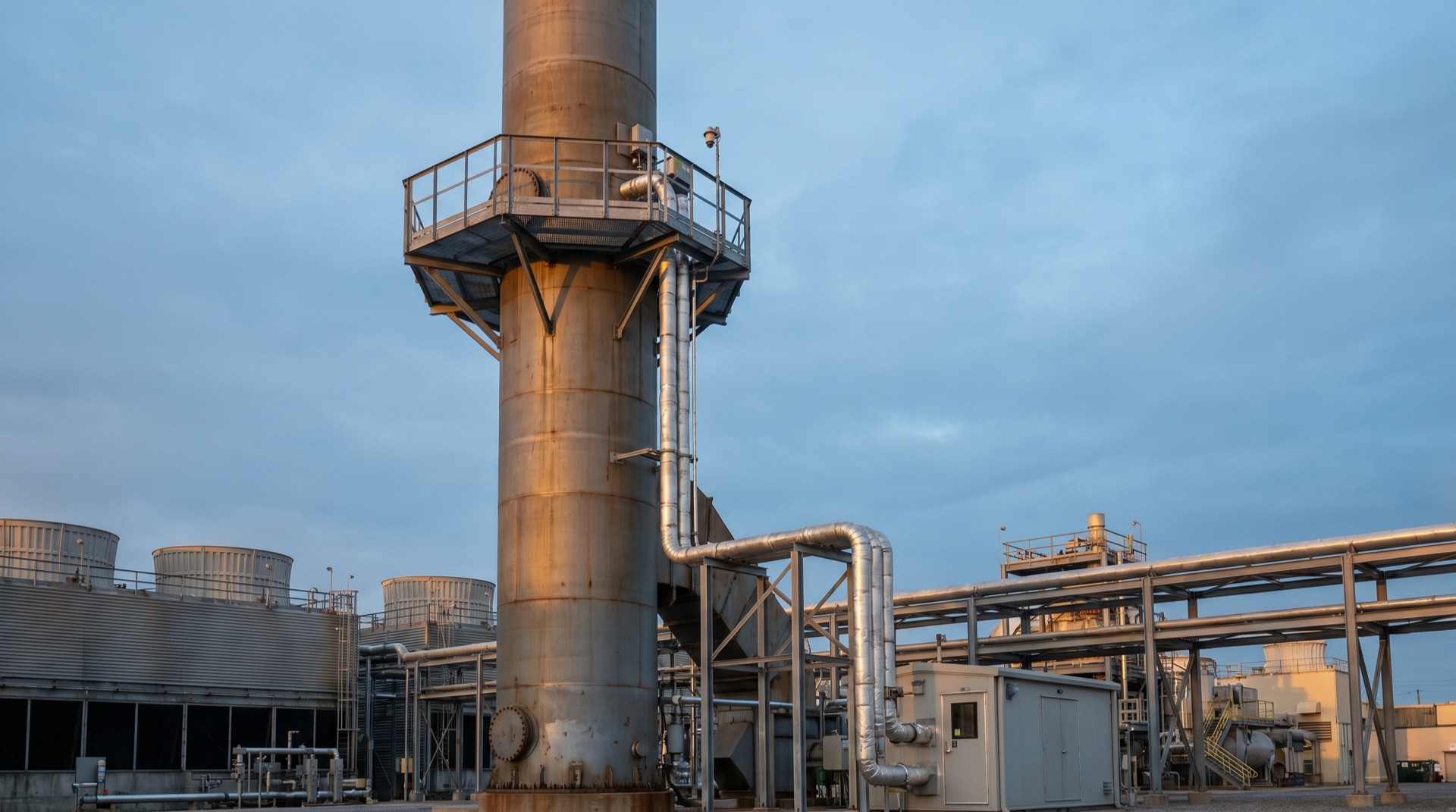
Regulations define what must be controlled and reported; instrumentation provides the evidence. A well-designed monitoring program turns regulatory obligations into reliable, auditable data streams.
When an approval requires continuous measurement of stack gases such as nitrogen oxides (NOx), sulphur dioxide (SO2), carbon monoxide (CO), or total hydrocarbons, a complete CEMS combines gas analyzers, sample handling, and data acquisition into a single compliance tool. Air emissions analyzers from ENVEA, available through Avensys, are designed for multi-gas measurement in demanding stack environments and form the analytical core of many Canadian CEMS installations.
Mercury and its compounds are managed federally as toxic substances under CEPA 1999, and certain sectors face mercury-specific monitoring and reporting expectations. Because mercury occurs in flue gas at trace concentrations, dedicated Mercury CEMS are engineered specifically for continuous low-level measurement and speciation in stack gas.
Dioxins and furans are persistent substances of federal concern that are released at extremely low concentrations, far below what conventional analyzers can resolve in real time. Compliance programs therefore rely on long-term sampling: a dioxin and furanes sampler collects a continuous, representative sample over an extended period for subsequent laboratory analysis, giving regulators a far more complete picture than occasional short stack tests.
Many approvals also set particulate matter limits and opacity provisions, covered in detail in our guide to particulate and opacity monitoring in exhaust stacks, as well as fenceline or community air quality conditions, discussed in our guide to ambient air quality analyzers around industrial sites.
These principles apply across sectors, from power generation and pulp and paper to chemical processing, and Avensys supports them all through its environmental monitoring portfolio.
CEPA 1999 is the federal statute that provides the legal authority for managing substances of concern in Canada. The NPRI is a specific program established under that statute: a mandatory, public inventory of pollutant releases, disposals, and transfers. Reporting to the NPRI is one obligation that can arise under CEPA 1999, but the Act also enables regulations, pollution prevention planning notices, and other instruments.
Facilities that meet ECCC’s reporting criteria for one or more listed substances must report. The criteria generally combine substance-specific quantity thresholds with employee-hour tests, and some sectors and activities have special provisions. Because the lists and thresholds are updated periodically, every facility should reassess its reporting obligation against ECCC’s current NPRI guidance each year.
No. Federal instruments under CEPA 1999 operate alongside provincial and territorial requirements. Most facilities hold a provincial approval or permit that sets site-specific emission limits and monitoring conditions, and they must comply with both layers. When in doubt, confirm requirements with ECCC and your provincial regulator rather than assuming one satisfies the other.
Yes. Continuous monitoring data is one of the accepted bases for estimating releases, and direct measurement is generally considered more defensible than emission factors or engineering estimates. Facilities that already operate CEMS for permit compliance can often leverage the same data streams for their annual NPRI submissions, provided the data meet appropriate quality-assurance standards.
Start with ECCC’s published listings of CEPA 1999 instruments and the current NPRI substance list, then review your provincial approval and any sector-specific rules in your jurisdiction. Many operators engage environmental consultants or legal counsel for a formal applicability review. On the measurement side, an instrumentation partner such as Avensys can help translate the resulting obligations into a practical monitoring system.
Avensys Solutions is a proud member of The Hoskin Group, supporting Canadian industry with instrumentation supply, technical service and systems integration.
Avensys Solutions supplies and supports environmental and industrial instrumentation for emissions compliance across Canada, including ENVEA gas analyzers, mercury monitoring systems, and dioxin and furan samplers. Beyond equipment, our value-added services help you keep compliance data flowing:
Learn more about our value-added services or contact our team to discuss your facility’s requirements. And for the complete technical picture behind emissions compliance in Canada, return to our pillar resource: the continuous emissions monitoring systems (CEMS) compliance guide.

Our goal is to offer broad capabilities, competitive pricing, exceptional quality and outstanding service to each and every customer across Canada.
A Division of The Hoskin Group. Canada’s Instrumentation Leader
©2026 Avensys · Powered by Canibuy™