A Division of The Hoskin Group. Canada’s Instrumentation Leader 


Every boiler, furnace, and process heater burns money along with its fuel, the only question is how much. A combustion analyzer measures oxygen, carbon monoxide, stack temperature, and other flue gas parameters to show whether a burner is running lean, rich, or right on target. With that insight, plant teams routinely recover fuel that would otherwise disappear up the stack while cutting carbon monoxide, NOx, and greenhouse gas emissions at the same time. This guide explains how flue gas analysis works, when to choose a portable instrument over a fixed one, and how O2/CO trim keeps combustion at its peak. It is part of our complete guide to continuous emissions monitoring systems (CEMS), which covers the wider regulatory and instrumentation landscape for industrial stacks.
Combustion efficiency comes down to managing excess air. Feed the burner too much air and it heats nitrogen and surplus oxygen that carry valuable heat straight up the stack. Feed it too little and combustion is incomplete, producing carbon monoxide, soot, and unburned fuel, wasted energy and a genuine safety hazard. The optimum sits in a narrow band between those extremes, and that band shifts constantly with fuel quality, burner wear, ambient conditions, and load.
Without measurement, operators understandably tune burners with a generous cushion of excess air, quietly sacrificing efficiency year after year. Regular flue gas analysis replaces that guesswork with data: it quantifies stack losses, flags deteriorating burners and fouled heat-transfer surfaces before they fail, and documents the combustion performance that industrial facilities and power generation plants are increasingly asked to demonstrate.
A modern flue gas analyzer draws a sample from the stack or breeching through a probe and conditioning system, then measures it with electrochemical or infrared sensors. The most useful parameters include:
Together, these readings build a complete picture of burner and boiler health. Rising stack temperature at constant load suggests soot or scale on heat-transfer surfaces, while creeping CO at an unchanged O2 setpoint can reveal burner wear, poor atomization, or flame impingement long before an alarm would.
Both portable and permanently installed instruments have a place in a well-run plant. The right choice depends on how often you need the data and what you intend to do with it.
A portable combustion analyzer is the workhorse of commissioning, seasonal tune-ups, and troubleshooting: one instrument can service every burner on site and travel between facilities. Fixed analyzers, by contrast, watch a single stack continuously and feed live data to the control system, capturing every load swing and fuel change that a periodic test would miss.
| Consideration | Portable analyzer | Fixed / continuous analyzer |
|---|---|---|
| Typical role | Tune-ups, commissioning, troubleshooting, audits | Continuous trim control and emissions monitoring |
| Data pattern | Snapshots at the time of the test | Around-the-clock data across all loads and fuels |
| Installation | None, probe inserted into a test port | Engineered sample point, mounting, and controls integration |
| Coverage | One instrument serves many assets | Dedicated to a single stack or duct |
| Best fit | Small and mid-sized boilers, service teams, multi-site fleets | Large boilers and furnaces where small efficiency gains carry large dollar value |
For environmental work, a portable emissions analyzer extends the same sampling approach to NOx and SO2 verification, pre-compliance screening, and burner certification testing. Stacks that fall under continuous monitoring obligations move into full CEMS territory, often alongside particulate and opacity monitoring on the same exhaust.
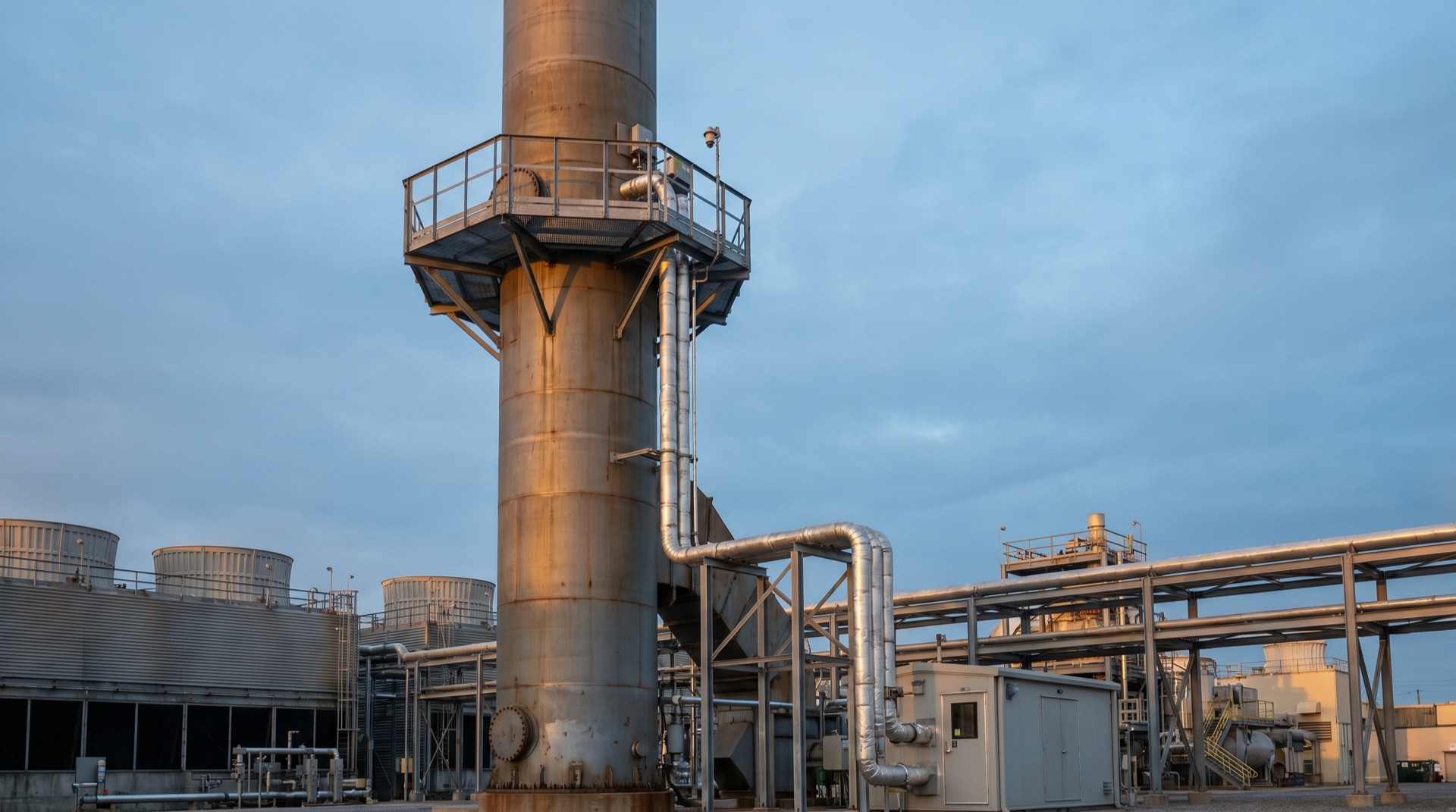
A manual tune-up captures the conditions of a single afternoon. O2 trim makes optimization continuous. An in-situ oxygen analyzer, commonly a zirconia probe mounted directly in the flue, feeds a live O2 reading to the combustion control system, which automatically adjusts the air damper or fan speed to hold the target excess air across the entire firing range. The result is a burner that stays at its tuned optimum through weather changes, load swings, and fuel variations.
CO trim refines the strategy further. Because CO rises sharply just before combustion turns incomplete, adding a CO measurement lets the control system operate closer to the true stoichiometric optimum than a conservative O2 setpoint alone allows, backing off automatically the moment CO begins to break through. Even with trim control in place, periodic verification with a portable instrument remains best practice: it provides an independent check on the installed sensors and a documented efficiency record for energy and maintenance programs.
Avensys Solutions supplies the ECOM range of combustion analyzers across Canada. ECOM is recognized for rugged, field-ready instruments, with a portfolio spanning compact analyzers for routine boiler and burner service through to industrial-grade portable emissions analyzers for demanding stack-testing work. Choosing the right ECOM combustion analyzer comes down to the gases you need to measure, the fuels you fire, and how results must be logged and reported, exactly the questions our applications team helps customers answer every day. ECOM instruments also complement the wider analytical instrumentation portfolio Avensys offers for process and emissions applications.
Efficiency and compliance are two sides of the same flame. The tuning that saves fuel typically lowers CO, NOx, and greenhouse gas output as well, which matters under the federal CEPA 1999 framework, National Pollutant Release Inventory (NPRI) reporting, and the provincial permits and approvals that govern most combustion sources. Requirements vary widely by jurisdiction, sector, and equipment size, so always confirm your specific obligations with the relevant authority. Our companion article on CEPA regulations for industrial emissions unpacks the regulatory landscape, and facilities concerned with off-site impacts can explore ambient air quality analyzers for monitoring around the fence line. For complete monitoring programs, Avensys offers a full suite of environmental solutions.
Core measurements are oxygen, carbon monoxide, and stack temperature, from which the instrument calculates carbon dioxide, excess air, and combustion efficiency for the selected fuel. Many models add NO, NO2, SO2, draft, and differential pressure for emissions tuning and complete burner diagnostics.
It depends on size and duty. A common approach is a full combustion test at least seasonally for smaller boilers, and monthly, or continuously, via fixed analyzers and O2 trim, for large or critical units. Insurers and local authorities may set their own testing expectations, so verify what applies to your equipment.
The terms overlap. A flue gas or combustion analyzer focuses on efficiency parameters such as O2, CO, and stack temperature. A portable emissions analyzer typically adds or upgrades sensors for NOx and SO2 with higher accuracy demands, supporting environmental verification rather than burner tuning alone. Many ECOM instruments handle both roles.
O2 trim is a closed-loop control strategy in which an in-stack oxygen analyzer continuously adjusts the air-fuel ratio to hold optimal excess air. On boilers with significant fuel spend or wide load swings, it preserves tuned efficiency around the clock rather than only on the day of a tune-up, and payback is often rapid. An engineering review of your burner and controls will confirm suitability.
Sometimes. Portable analyzers are widely used for screening, verification, and certain jurisdiction-accepted test methods, but formal compliance demonstrations may require specified reference methods or certified continuous monitoring. Check the applicable federal or provincial requirements, or ask our team, before relying on portable data for an official submission.
Avensys Solutions is a proud member of The Hoskin Group, supporting Canadian industry with instrumentation supply, technical service and systems integration.
Avensys Solutions supports combustion and emissions projects across Canada, from supplying a single portable analyzer to engineering a complete monitoring installation. Every instrument we provide is backed by value-added services:
Explore our instrumentation services or contact our team to discuss your application. And when you are ready to look beyond the burner, return to our continuous emissions monitoring systems (CEMS) compliance guide for the full picture of stack monitoring and compliance in Canada.

Our goal is to offer broad capabilities, competitive pricing, exceptional quality and outstanding service to each and every customer across Canada.
A Division of The Hoskin Group. Canada’s Instrumentation Leader
©2026 Avensys · Powered by Canibuy™