A Division of The Hoskin Group. Canada’s Instrumentation Leader 


Electrical equipment and explosive atmospheres are a dangerous combination. In power plants, chemical facilities, and other sites where flammable gases or vapours may be present, a single spark inside a control panel, analyzer cabinet, or motor can have catastrophic consequences. Enclosure purging systems address this risk by maintaining a protective atmosphere of clean air or inert gas inside the enclosure, keeping the surrounding hazardous atmosphere out. This article explains how a purge and pressurization system works, covers the basics of hazardous area classification, and outlines how to specify the right protection for your facility. It is one chapter in our complete guide to industrial gas detection and hazardous area safety.
A purge and pressurization system, designated “Ex p” in international standards such as IEC 60079-2, and addressed in North American practice by documents such as NFPA 496, is a method of explosion protection that keeps flammable gases away from potential ignition sources inside electrical equipment. The concept works in two stages:
The result is a purged enclosure whose interior behaves like a safe area, even though the equipment is installed in a classified hazardous location. Compared with alternatives such as explosion-proof (flameproof) enclosures or intrinsically safe circuits, purge and pressurization offers real practical advantages: it scales to large enclosures and complete control panels, it allows the use of standard general-purpose instruments, drives, and electronics, and it simplifies maintenance because heavy cast housings and barrier engineering are not required for every internal component.
Before any protection method can be selected, the location itself must be understood. Hazardous area classification is the engineering process of dividing a facility into areas according to the likelihood that an explosive atmosphere will be present. Two classification systems are encountered in Canada:
| Likelihood of Explosive Atmosphere | Zone System (Gas/Vapour) | Division System |
|---|---|---|
| Present continuously or for long periods | Zone 0 | Class I, Division 1 |
| Likely to occur in normal operation | Zone 1 | |
| Not likely in normal operation; short duration if it occurs | Zone 2 | Class I, Division 2 |
In Canada, classification and equipment selection are governed by the Canadian Electrical Code (CSA C22.1) and enforced by the local authority having jurisdiction. Area classification drawings should always be prepared or reviewed by a qualified engineer, and certification requirements verified with the relevant authority before equipment is purchased. The classification of the area dictates which purge type is appropriate, which brings us to the X, Y, Z designations.
North American practice defines three purge types according to how far the protection “reduces” the classification inside the enclosure, and what must happen if pressurization is lost:
| Purge Type | Classification Reduction | Typical Response to Loss of Pressure |
|---|---|---|
| Type X | Reduces Division 1 (Zone 1) to non-hazardous inside the enclosure | Automatic disconnection of power to equipment that is not otherwise protected |
| Type Y | Reduces Division 1 to Division 2 inside the enclosure | Alarm; internal equipment must itself be suitable for Division 2 |
| Type Z | Reduces Division 2 (Zone 2) to non-hazardous inside the enclosure | Alarm to a constantly attended location |
The IEC system uses broadly comparable designations, px, py, and pz, under the Ex p umbrella. The practical takeaway is the same in both systems: the more severe the area classification and the less protected the internal equipment, the more rigorous the purge system’s monitoring and interlocking must be. A Type X system in a Zone 1 process unit will cut power automatically on pressure failure, while a Type Z system in a Zone 2 area may simply raise an alarm for operator response. How those alarms are presented to operators matters too, see our companion article on alarm management and annunciators in industrial control systems.
Modern enclosure purging systems are far more than a regulator and an orifice. A complete purge controller manages the full protection sequence:
Avensys Solutions supplies enclosure purging systems from Expo Technologies, a long-established specialist in purge and pressurization equipment. The range of purge and pressurization systems for electrical enclosures covers control panels, analyzer houses, and instrument cabinets across the common purge types, with pneumatic-only options for locations where no electrical supply is desirable.
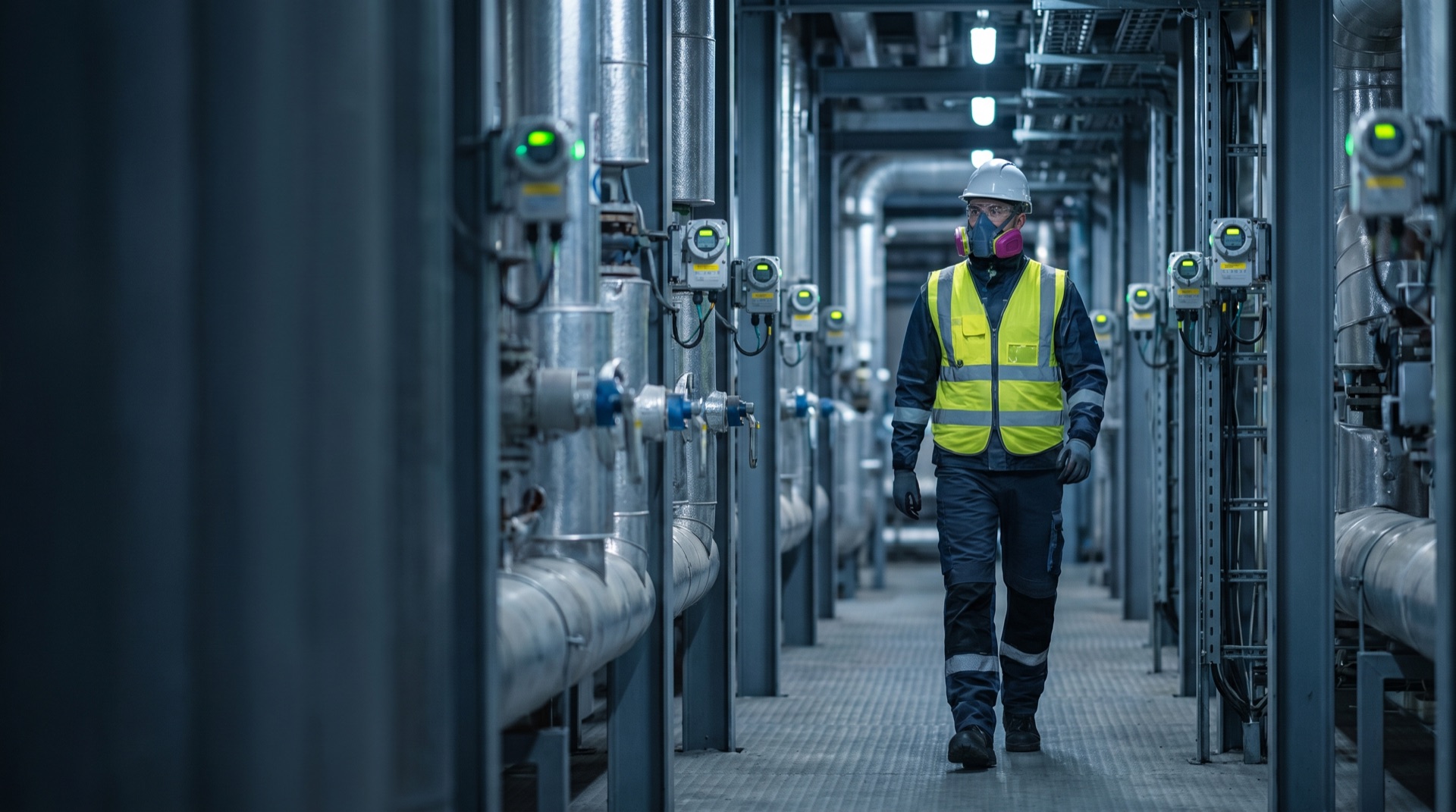
Large motors and generators present a particular challenge in classified areas. Flameproof construction becomes impractical and costly at frame sizes common in power generation and chemical processing, and the machines themselves, with brushes, slip rings, or heaters, contain credible ignition sources. Purpose-built motor purge systems apply the same Ex p principle to rotating equipment: the motor enclosure is purged before starting and held under positive pressure while running, with interlocks preventing energization until the purge cycle is complete. This approach lets plants use standard or modified general-purpose machines in hazardous locations, simplifying procurement, spares, and rewinds over the life of the asset.
In power generation, purged enclosures protect analyzer cabinets and control panels in fuel-gas conditioning areas, turbine packages, and hydrogen-handling zones around generators and electrolyzers. In the chemical industry, purge and pressurization is a workhorse technique for control systems, drives, and analyzers installed near reactors, solvent handling, and loading operations where flammable vapours are routinely present.
It is worth emphasizing that a purged enclosure protects the equipment inside it, it does not detect or manage the hazardous atmosphere around it. A robust hazardous area strategy layers complementary measures: fixed and portable gas detectors to identify leaks early, flammability and BTU analyzers to monitor process streams, and well-engineered alarms to drive operator response. Explore our full range of industrial safety solutions for the broader toolkit.
Purging is the initial flush: protective gas flows through the enclosure to displace any flammable atmosphere before power is applied. Pressurization is the ongoing state: a small positive pressure is maintained so the surrounding hazardous atmosphere cannot enter. A complete purge and pressurization system automates both stages and supervises them continuously.
Generally no. Opening the door breaks pressurization, and depending on the purge type the system will either trip power automatically or raise an alarm requiring action. Safe work procedures typically require de-energization or a documented gas-test regime before opening any purged enclosure in a classified area. Always follow your site procedures and the manufacturer’s instructions.
Clean, dry, instrument-quality compressed air is the most common choice because it is economical and readily available. Inert gas such as nitrogen is used where flammable process gas could be released inside the enclosure, for example, in some analyzer applications, though nitrogen introduces asphyxiation considerations that must be managed in the design.
Yes, provided the appropriate purge type is used. Type X (or px) systems are designed to make the interior of an enclosure in a Zone 1 or Division 1 location effectively non-hazardous, with automatic power disconnection if pressure is lost. The system and installation must carry certification acceptable to the authority having jurisdiction.
Explosion-proof (flameproof) enclosures contain an internal explosion and quench escaping gases; they suit compact, fixed equipment but become heavy and expensive at larger sizes. Purge and pressurization prevents the explosive atmosphere from reaching ignition sources in the first place, scales economically to large panels and motors, and permits standard internal components, at the cost of requiring a reliable protective gas supply.
Enclosure protection is one pillar of a complete hazardous area program. For the full picture, detection technologies, analyzer strategies, and alarm philosophy, return to our pillar guide on industrial gas detection and hazardous area safety.
Avensys Solutions is a proud member of The Hoskin Group, supporting Canadian industry with instrumentation supply, technical service and systems integration.
Avensys Solutions helps Canadian power, chemical, and industrial facilities protect electrical equipment in hazardous areas with proven purge and pressurization technology from Expo Technologies. Beyond supplying hardware, our team provides Integrated Systems Design to engineer purge solutions around your enclosures and area classification, Start-up & Commissioning to verify purge cycles, interlocks, and alarms before your system goes live, and Field & In-House Service to keep protection systems inspection-ready throughout their life. Learn more about our value-added services or contact our team to discuss your application.

Our goal is to offer broad capabilities, competitive pricing, exceptional quality and outstanding service to each and every customer across Canada.
A Division of The Hoskin Group. Canada’s Instrumentation Leader
©2026 Avensys · Powered by Canibuy™