A Division of The Hoskin Group. Canada’s Instrumentation Leader 


Few industrial hazards escalate as quickly as an uncontrolled gas release. A flammable vapour cloud can find an ignition source in seconds, a pocket of hydrogen sulphide can incapacitate a worker before they smell anything, and a slow nitrogen leak can quietly displace the oxygen in a confined space. Reliable industrial gas detection systems, combined with disciplined hazardous area monitoring and properly protected electrical equipment, form the backbone of process safety at refineries, chemical plants, power stations, wastewater facilities, and biogas operations across Canada. This complete guide explains how fixed gas monitors, purge and pressurization systems, flammability analyzers, BTU analyzers, and alarm annunciators work together as layers of protection, and how to build a defensible gas detection program for your site.
Avensys Solutions supplies and supports gas detection and hazardous area safety instrumentation for Canadian industry, representing brands such as Sensidyne, Expo Technologies, Control Instruments Corporation (CIC), and Ametek. Use the table of contents below to jump to any section, or follow the links into our four in-depth cluster guides.
On this page
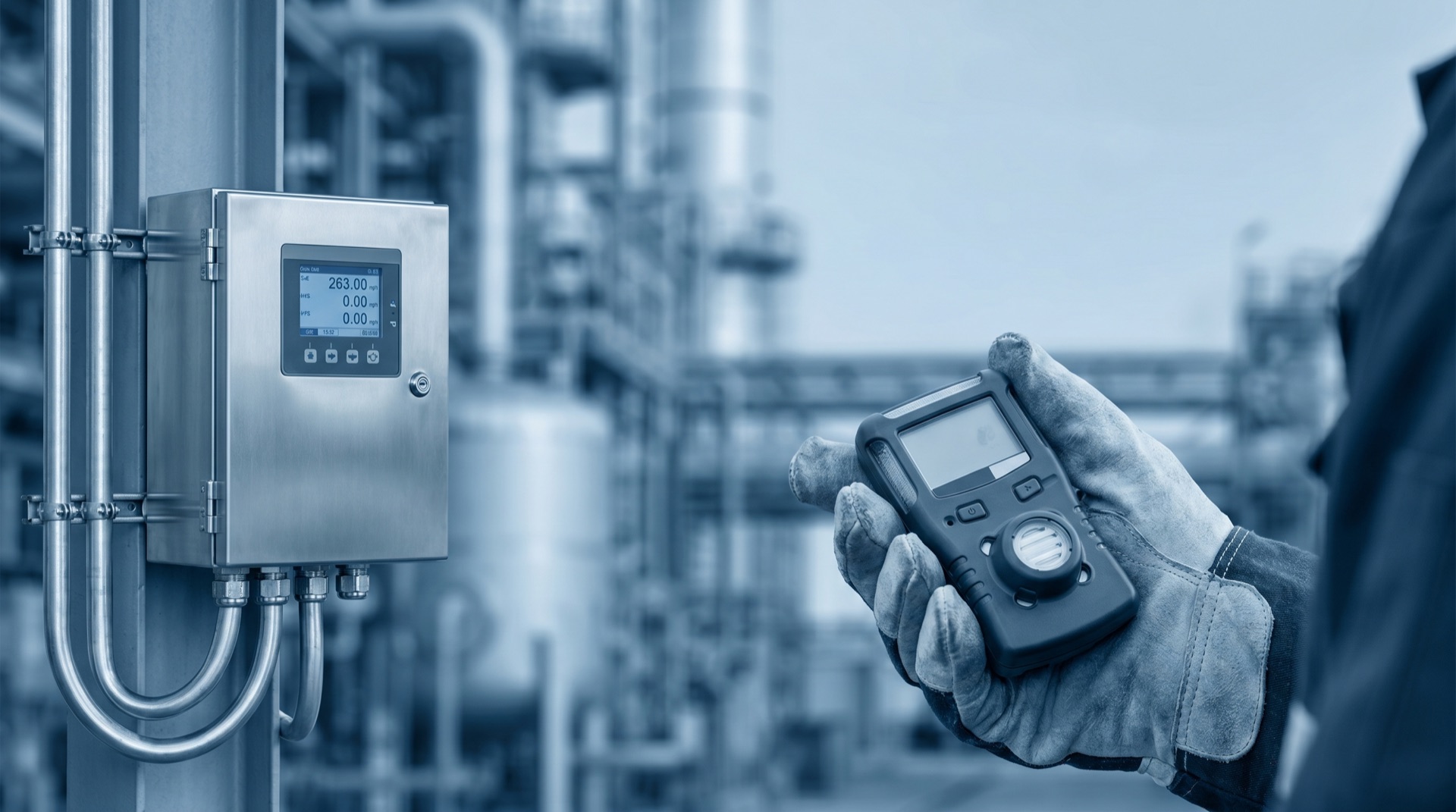
Every combustion event needs three things: fuel, oxygen, and an ignition source. In a process plant, fuel is often already present in pipes, vessels, and tanks; oxygen is in the surrounding air; and potential ignition sources, from electrical equipment to hot surfaces, are everywhere. Gas detection and hazardous area safety practices attack this triangle from multiple directions at once.
A mature safety strategy is built on independent layers of protection:
There are strong compliance drivers as well. Provincial occupational health and safety regulations require employers to assess atmospheric hazards and protect workers, particularly for confined space entry. The Canadian Electrical Code (CSA C22.1) governs electrical installations where flammable gases or combustible dusts may be present, while facilities operating in or selling into the United States must also consider the National Electrical Code (NEC, NFPA 70). Because requirements vary by jurisdiction, always confirm details with the authority having jurisdiction (AHJ) for your facility.
Effective monitoring starts with understanding what you are trying to detect. Industrial gas hazards generally fall into four categories:
The dominant hazards differ by industry. Wastewater treatment plants contend with hydrogen sulphide and methane in headworks and digesters. Biogas and green energy facilities manage methane-rich gas streams whose composition shifts with the process; pairing safety detection with biogas composition analysis gives operators both the safety and the process picture. Power generation sites monitor hydrogen around hydrogen-cooled generators and battery rooms, while chemical plants often face long lists of flammable and toxic compounds simultaneously. A documented hazard inventory, area by area, is the foundation of every detector placement decision that follows.
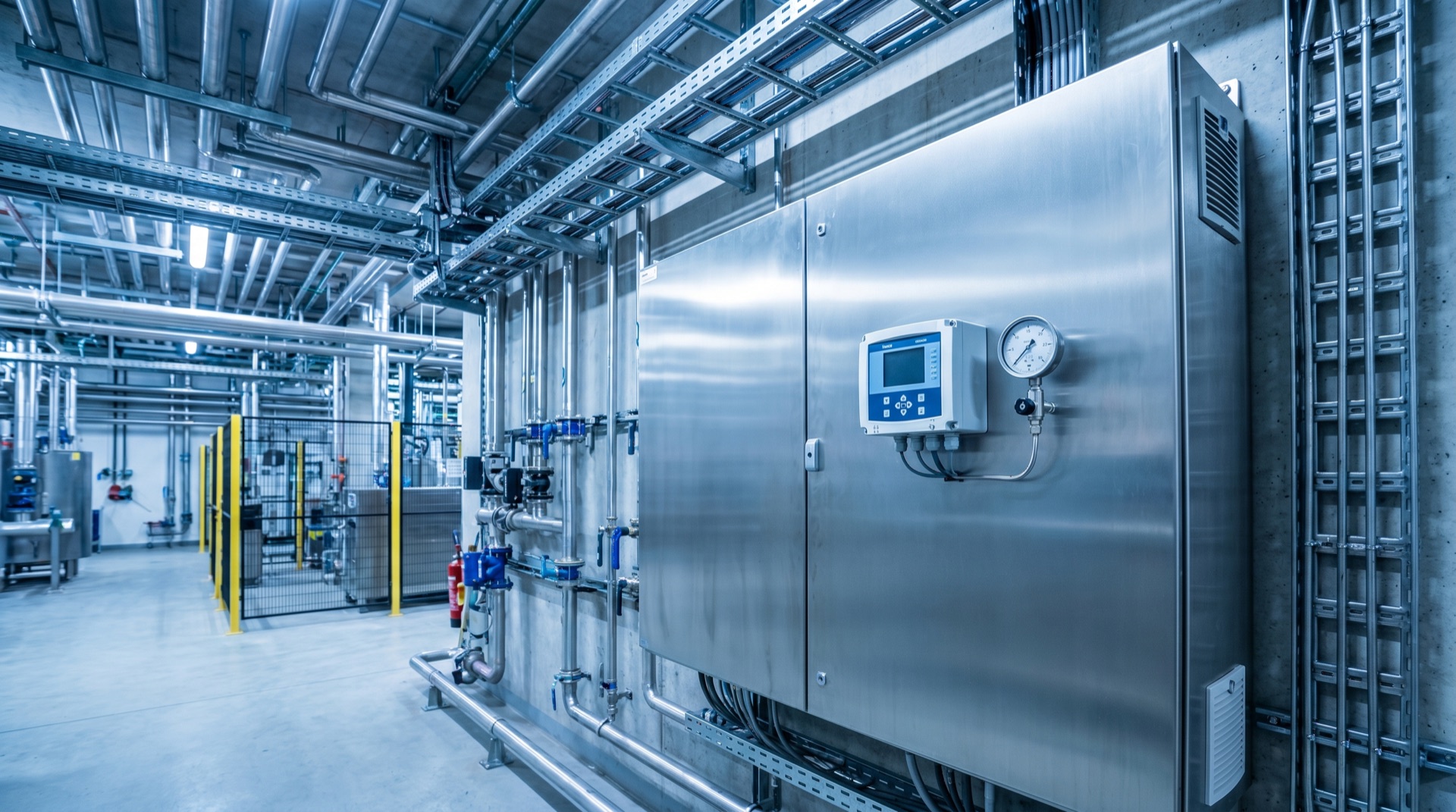
One of the first design questions for any facility is where to rely on permanently installed fixed gas monitors and where portable, worker-worn instruments are the right tool. The honest answer for most sites is both, deployed deliberately.
Fixed gas detection systems are permanently mounted sensors wired (or wirelessly connected) to controllers, alarm devices, and plant control systems. They watch a defined area 24 hours a day, trigger local and remote alarms, and can initiate automated actions such as starting ventilation or shutting down equipment. Portable gas detectors travel with the worker, protecting people wherever they go, and are the standard tool for confined space entry, maintenance rounds, and leak investigation.
| Consideration | Fixed Gas Monitors | Portable Detectors |
|---|---|---|
| Primary purpose | Continuous area and asset protection | Personal protection wherever workers go |
| Coverage | Defined zones around likely leak sources | The immediate breathing zone of the user |
| Integration | Ties into alarms, ventilation, and shutdown systems | Local audible, visual, and vibration alarms |
| Typical use cases | Compressor buildings, analyzer shelters, digesters, storage areas | Confined space entry, inspections, maintenance, emergency response |
| Operating discipline | Scheduled calibration and maintenance program | Bump testing and docking routines before each use |
Sensor technology matters as much as form factor. Electrochemical cells are the workhorse for toxic gases and oxygen; catalytic bead and infrared sensors cover combustible gases; and photoionization detectors (PID) extend detection to many volatile organic compounds. Each technology has strengths, cross-sensitivities, and environmental limits, which is why placement and sensor selection deserve an engineering review rather than a catalogue guess. Avensys supplies Sensidyne gas detectors for fixed-point applications, including the SensAlarm Flex point gas detection platform for locations that need a self-contained detect-and-alarm solution.
For a deeper comparison of architectures, sensor technologies, and placement strategy, read our cluster guide on fixed vs. portable gas detectors and when to use each.
Hazardous area classification answers a deceptively simple question: in which parts of the plant could a flammable atmosphere exist, and how likely is it? The answer determines what electrical equipment can be installed there, what protection techniques are acceptable, and where hazardous area monitoring should be concentrated.
Two classification frameworks dominate North American practice. The NEC (NFPA 70), used in the United States, historically classifies locations by Class (the type of hazardous material) and Division (the likelihood it is present). The Canadian Electrical Code (CSA C22.1) has adopted the international Zone system for new gas and vapour installations, while many existing Canadian facilities still carry legacy Class/Division documentation. The simplified NEC hazardous area classification chart below summarizes both schemes for flammable gases and vapours:
| Designation | Hazardous Material | Likelihood of Flammable Atmosphere |
|---|---|---|
| Class I, Division 1 | Flammable gases or vapours | Present under normal operating conditions, or frequently due to maintenance or leakage |
| Class I, Division 2 | Flammable gases or vapours | Present only under abnormal or fault conditions, such as a container or system failure |
| Class II, Divisions 1 and 2 | Combustible dusts | Same normal vs. abnormal logic, applied to dust clouds and layers |
| Class III, Divisions 1 and 2 | Ignitable fibres and flyings | Same normal vs. abnormal logic, applied to fibres and flyings |
| Zone 0 | Flammable gases or vapours | Present continuously or for long periods |
| Zone 1 | Flammable gases or vapours | Likely to occur in normal operation |
| Zone 2 | Flammable gases or vapours | Not likely in normal operation; if it occurs, it is of short duration |
Materials are further divided into gas groups (acetylene and hydrogen, for example, are treated more severely than propane-type atmospheres) and temperature codes that limit equipment surface temperatures. A classification chart is a useful orientation tool, but it is not a substitute for a formal area classification study: classification drawings must be prepared by qualified engineers to the applicable code, kept current as the process changes, and accepted by the AHJ.
Classification also shapes the gas detection design itself: instruments installed inside classified areas must themselves be suitably rated. This interplay between classification, equipment protection, and monitoring is exactly where the next layer of the toolkit comes in.
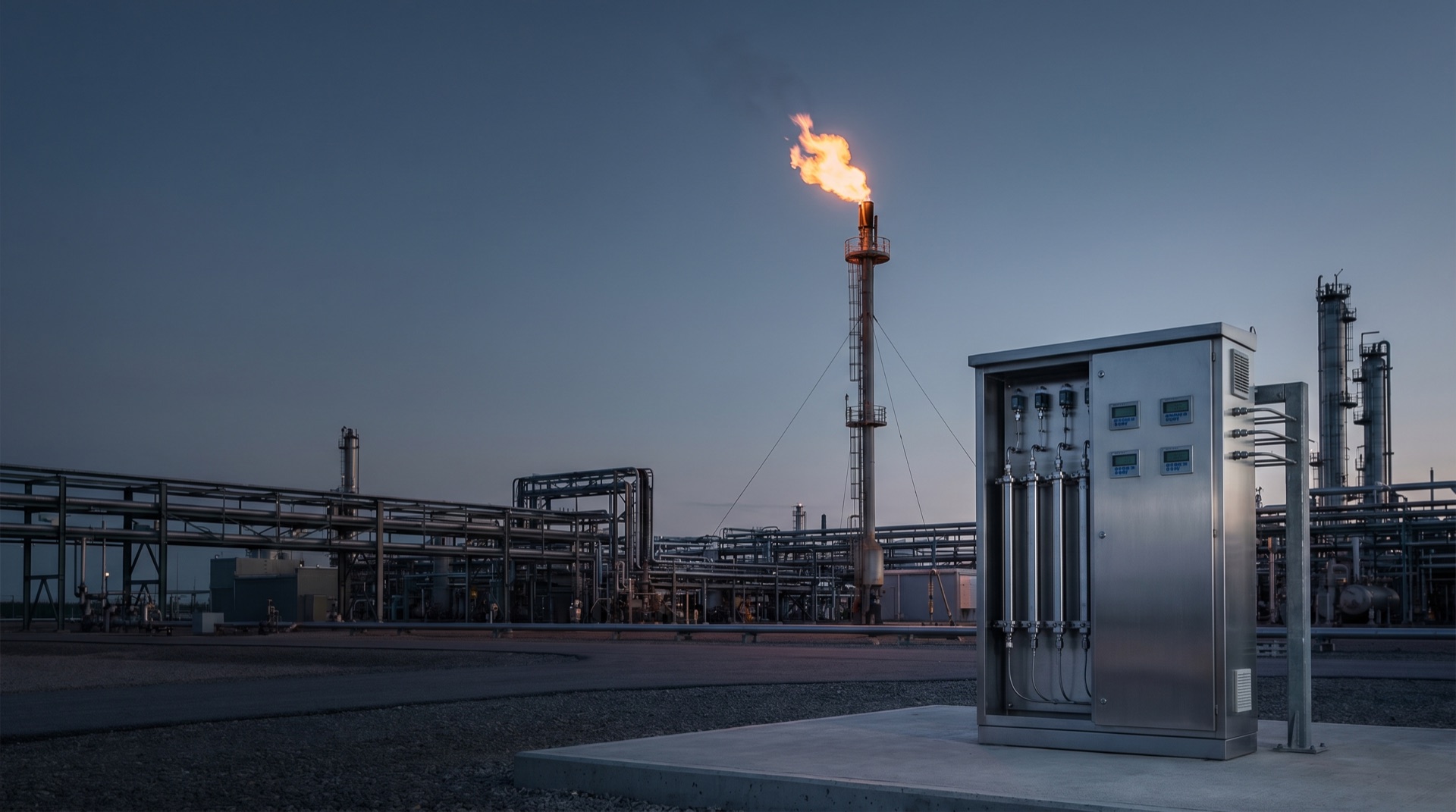
What do you do when a control panel, analyzer, large motor, or computer simply has to live inside a classified area, and an explosion-proof rated version is impractical or unavailable? The pressurization technique, designated Ex p in the international scheme, solves the problem by changing the atmosphere inside the enclosure rather than armouring it.
A purge and pressurization system works in two stages. First, it purges the enclosure with a protective gas, typically clean instrument air or an inert gas, flushing out any flammable atmosphere that may have accumulated inside. Then it maintains a small positive pressure so that the surrounding hazardous atmosphere cannot enter. Pressure and flow are continuously supervised: if the protective pressure is lost, the system raises an alarm or removes power, depending on the level of protection required for the area. In broad terms, different purge types exist to take equipment in more severe zones or divisions down to a safer effective rating, and the correct type follows directly from the area classification and the equipment inside.
Purged enclosures are everywhere once you start looking: analyzer houses in refineries, drive panels in chemical plants, large motors in process buildings, and computer enclosures on solvent-handling lines. Compared with certified explosion-proof housings, pressurization is often the more flexible and economical path, especially for equipment that gets upgraded over its life.
Avensys supplies enclosure purging systems from Expo Technologies, a long-established specialist in purge and pressurization for control panels, analyzers, and motors. To understand purge types, protective gas supply requirements, and how pressurization fits alongside other protection techniques, see our full guide to enclosure purging and pressurization for hazardous areas.
Area gas detectors protect against leaks into the workplace, but many explosion risks live inside the process: solvent-laden air in a drying oven, vent headers collecting mixed vapours, or waste gas streams headed to a flare or thermal oxidizer. These applications call for process analyzers rather than ambient detectors.
A flammability analyzer continuously measures how close a process stream is to its lower flammable limit, typically reporting in percent LFL. Industrial ovens, dryers, and coating lines use this measurement to stay safely below the flammable range while minimizing the energy wasted on excess dilution air; standards such as NFPA 86 describe how continuous LFL monitoring can support oven and furnace safety strategies. Because process streams are often hot, wet, and chemically variable, flammability analyzers are engineered for fast response and stable readings across changing mixtures, which is a very different problem from ambient LEL detection.
A BTU analyzer, also called a calorific value or heating value analyzer, measures the energy content of a fuel or waste gas stream. This matters in several ways: flare and thermal oxidizer operators need to know whether a waste gas will sustain combustion or needs support fuel; biogas and landfill gas producers track heating value as they upgrade or blend gas; and power and industrial boiler operators use calorific value measurement to manage fuel quality and combustion control. In waste gas service, BTU measurement and flammability measurement are two sides of the same safety-and-efficiency question.
Avensys represents flammability analyzers from Control Instruments Corporation (CIC), whose product lines address both percent-LFL monitoring and calorific value measurement, and offers a broad portfolio of gas analyzers for related process and environmental applications. If your interest extends to stack emissions and burner tuning, our guide to combustion analyzers for boiler and furnace efficiency is a natural companion. For the full treatment of LFL monitoring, BTU measurement, and application engineering, read flammability and BTU analyzers: preventing explosions in industrial processes.
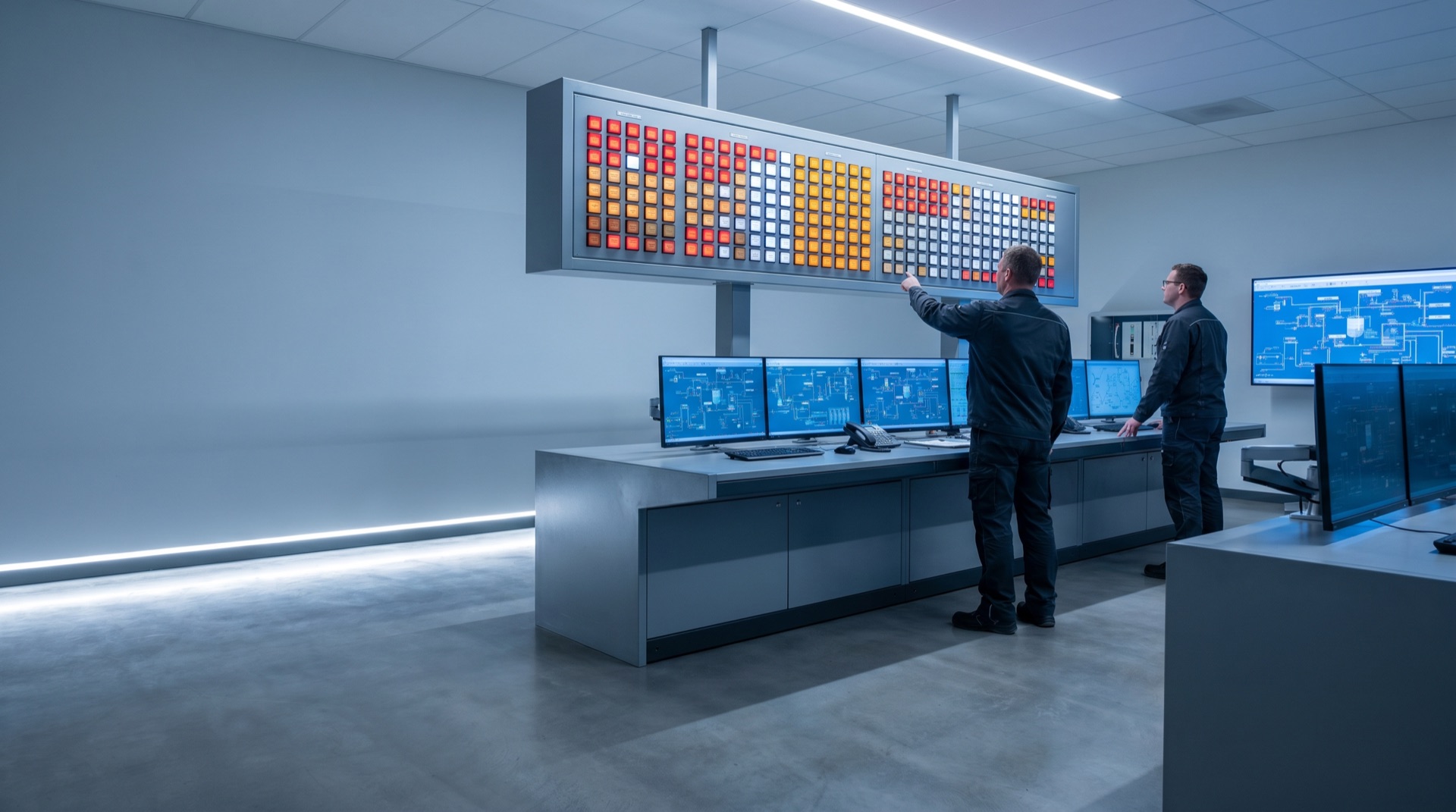
A gas detector that nobody notices is just a data logger. The final layer of the safety chain is making sure that every detected hazard produces a clear, prioritized, actionable alarm, and that operators are not so flooded with nuisance alarms that they tune out the one that matters.
Dedicated alarm annunciators remain a mainstay of critical alarming precisely because they are simple and robust: a hardwired panel of clearly labelled windows that illuminate and sound in defined sequences, independent of the plant control system. For gas detection, safety shutdowns, and utility failures, an annunciator gives operators an at-a-glance picture that survives even when the DCS or SCADA system does not. Ametek’s Panalarm line is a long-standing example of this technology, available through the Avensys alarm management portfolio.
Hardware is only half the story. Standards such as ISA-18.2 describe the lifecycle of a healthy alarm system: develop an alarm philosophy, rationalize every alarm so it has a defined cause, consequence, and operator action, prioritize honestly, and monitor performance to catch alarm floods. Gas detection alarms deserve special attention because the required responses, from donning protective equipment to evacuating a unit, are so consequential. Our cluster guide on alarm management and annunciators in industrial control systems covers the practices and hardware in depth.
The technologies above only deliver their value when they are tied together by a deliberate program. A practical roadmap looks like this:
Regulatory expectations come from several directions at once: provincial occupational health and safety legislation, the Canadian Electrical Code, fire codes, and industry standards from bodies such as CSA, NFPA, and ISA. Treat the descriptions in this guide as orientation, and verify specific requirements with the relevant authority and the current edition of each standard before finalizing a design.
Each pillar of gas detection and hazardous area safety gets a full, practical treatment in its own guide:
Related Avensys resources include our guides to continuous emissions monitoring systems (CEMS) and process instrumentation for industrial and green energy applications, which share many of the same analyzer technologies and industries.
A gas detector is a safety device that watches ambient air for a hazardous condition, such as a combustible gas approaching its LEL or a toxic gas above an exposure threshold, and raises an alarm. A gas analyzer measures the composition or properties of a process stream, such as percent LFL or heating value, with the accuracy needed for process control and safety interlocks. Many facilities need both: detectors to protect people, and analyzers such as a flammability analyzer or BTU analyzer to manage the hazard inside the process itself.
Follow the manufacturer’s documented recommendations and your own risk assessment. Bump tests verify that a sensor responds to gas and alarms function, while full calibrations re-establish measurement accuracy at defined intervals. Harsh environments and critical applications justify more frequent checks, and every test should be documented in your safety program records.
A purge and pressurization system protects electrical equipment in a classified hazardous area by first flushing the enclosure with clean protective gas and then maintaining positive pressure so flammable atmospheres cannot enter. It is a recognized protection technique under both the NEC and the Canadian Electrical Code, typically chosen when the equipment inside, such as analyzers, drives, computers, or large motors, is impractical to obtain in explosion-proof certified form. The appropriate purge type depends on the area classification, so confirm the design with a qualified engineer and your AHJ.
The chart in this guide summarizes the NEC Class/Division scheme and the zone system used by the Canadian Electrical Code, and is a good orientation reference. However, the classification that legally applies to your facility is the one documented in your engineered area classification drawings, prepared to the current code edition and accepted by the authority having jurisdiction. If those drawings are missing or outdated, commissioning a classification study should come before any new equipment decisions.
A BTU analyzer measures the calorific (heating) value of a gas stream, which indicates how much energy it releases when burned. Operators of flares and thermal oxidizers use it to confirm waste gas combustibility and manage support fuel; biogas, landfill gas, and syngas producers use it to track fuel quality; and boiler operators use it for combustion management. In many waste gas applications it is paired with percent-LFL flammability measurement to cover both the safety and the efficiency side of the same stream.
Avensys Solutions is a proud member of The Hoskin Group, supporting Canadian industry with instrumentation supply, technical service and systems integration.
Avensys Solutions helps Canadian industrial facilities specify, install, and sustain gas detection and hazardous area safety instrumentation, from a single fixed gas monitor to an integrated detection, purging, and alarming package. Our value-added services include:
Learn more about Avensys services, or contact our team to discuss gas detection and hazardous area safety for your facility.

Our goal is to offer broad capabilities, competitive pricing, exceptional quality and outstanding service to each and every customer across Canada.
A Division of The Hoskin Group. Canada’s Instrumentation Leader
©2026 Avensys · Powered by Canibuy™