A Division of The Hoskin Group. Canada’s Instrumentation Leader 


Biogas is a variable fuel. The gas leaving an anaerobic digester shifts in composition from hour to hour as feedstock, loading rate and microbial activity change, and every one of those shifts affects engine performance, upgrading efficiency and equipment life. That is why biogas composition analysis, the continuous or scheduled measurement of methane (CH4), carbon dioxide (CO2), oxygen (O2) and hydrogen sulphide (H2S), is one of the highest-value instrumentation investments a plant can make. This guide explains what a biogas analyzer measures, which sensing technologies suit each gas, and how composition data protects combined heat and power (CHP) engines and upgrading equipment. It is one chapter in our complete guide to process instrumentation for industrial and green energy applications.
Plants measure gas composition for four distinct reasons, and a well-specified analyzer serves all of them at once.
| Gas | Typical presence in raw biogas | What it tells the operator |
|---|---|---|
| Methane (CH4) | Major component, commonly between half and two-thirds of the gas by volume | Energy content of the fuel; leading indicator of digester biology |
| Carbon dioxide (CO2) | Second-largest component | Balance of the digestion process; separation load on upgrading equipment |
| Hydrogen sulphide (H2S) | Trace gas, from a few ppm to several thousand ppm depending on feedstock | Corrosion risk; performance of desulphurization stages |
| Oxygen (O2) | Normally near zero | Air ingress; control feedback for air-injection desulphurization |
Methane is the product. Its concentration sets the energy content of every cubic metre of gas, drives air-fuel ratio control on the engine and determines how hard the upgrading plant must work. Reliable methane measurement also doubles as a process alarm: a sustained downward trend is frequently the first visible symptom of digester stress.
CO2 largely mirrors methane in raw biogas, but measuring it independently is worthwhile. The sum of CH4, CO2 and the remaining trace gases provides a built-in plausibility check on the analyzer itself, and the CO2 fraction defines the separation duty for any upgrading technology producing pipeline-quality renewable natural gas.
Hydrogen sulphide forms whenever sulphur-bearing material such as manure, protein-rich substrates or certain industrial residues is digested. During combustion it converts to sulphur oxides that acidify engine lubricating oil and corrode exhaust-side components; in moist raw gas it attacks piping and instrumentation directly. H2S monitoring in biogas before and after treatment confirms iron-salt dosing rates, the health of biological scrubbers and the breakthrough point of activated-carbon vessels, turning consumable replacement from guesswork into a data-driven decision. Because H2S is also acutely toxic, composition analysis complements, but never replaces, dedicated personnel protection such as fixed and portable gas detectors.
Many plants inject small, controlled amounts of air into the digester headspace for biological desulphurization. O2 measurement closes that control loop: too little air starves the sulphur-oxidizing bacteria, while too much dilutes the gas, raises upgrading costs and erodes safety margins. On plants without air dosing, any measurable oxygen is a leak alarm worth investigating immediately.
Modern biogas analyzers combine several sensing technologies in a single cabinet, together with the sample-conditioning hardware that makes warm, saturated, corrosive digester gas measurable in the first place.
| Gas | Common sensing technology | Practical considerations |
|---|---|---|
| CH4 and CO2 | Non-dispersive infrared (NDIR) | Stable optical measurement well suited to continuous duty |
| H2S | Electrochemical cell | Cells are consumed by exposure; sequential sampling extends their life |
| O2 | Electrochemical (paramagnetic in some designs) | Sensor aging and cross-sensitivities are managed through routine service |
Sample handling deserves as much attention as the sensors themselves: condensate removal, particulate filtration, flow regulation and flame arrestors all stand between the digester and a trustworthy reading. An analyzer is only as good as the sample it receives, which is why purpose-built biogas packages routinely outperform improvised assemblies of general-purpose gas analyzers.
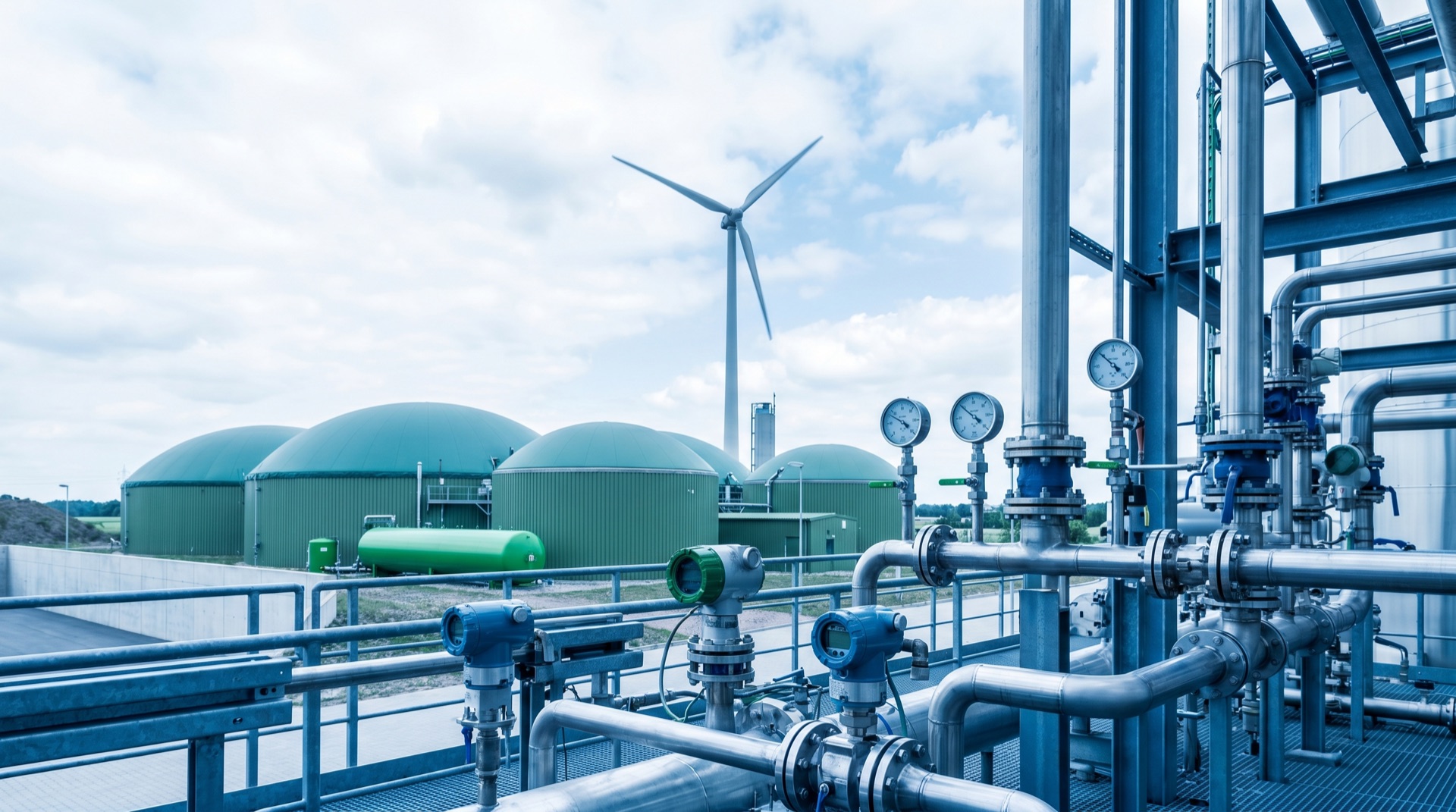
The CHP engine is usually the single most expensive asset on a biogas plant, and engine manufacturers publish fuel-gas quality requirements as a condition of warranty and service agreements. Continuous composition records demonstrate that the fuel stayed within specification, support oil-analysis programs and allow maintenance intervals to be planned around actual gas quality rather than worst-case assumptions.
Upgrading systems that produce renewable natural gas, whether membrane, water-wash, pressure-swing adsorption or amine based, are equally sensitive to feed-gas quality, and the receiving utility sets its own gas-quality specification for pipeline injection. Analyzer data at the upgrading inlet and product outlet documents performance on both sides of the process. Specifications and approval procedures vary by utility and by province, so always confirm the applicable requirements directly with the receiving authority.
A dedicated analyzer running continuously on a single stream delivers the fastest response, which suits control-critical points such as the engine feed. Many plants, however, need composition data from several locations: individual digesters, the gas mixing line, points before and after desulphurization, and the upgrading inlet. A sequential (multiplexed) analyzer samples each point in rotation through one set of sensors, lowering the cost per measuring point, extending electrochemical cell life and ensuring that readings from different digesters are directly comparable because they come from the same instrument.
Avensys supplies Awite biogas analyzers, an analysis platform developed specifically for anaerobic digestion processes and available in configurations that monitor multiple sampling points sequentially. You can also browse the broader biogas instrumentation category for complementary process equipment.
Composition is one half of the energy equation; flow is the other. Pairing the analyzer with appropriate low flow gas metering turns percent methane into usable energy figures. At laboratory and pilot scale, batch fermenter monitoring applies the same measurement principles to feedstock evaluation and biomethane potential testing, while stable digester operation rests on sound industrial temperature and pressure measurement. Avensys supports the biogas and green energy sector across all of these disciplines through its analytical and process instrumentation portfolios.
The core parameters are methane (CH4), carbon dioxide (CO2), oxygen (O2) and hydrogen sulphide (H2S). Depending on the process, configurations can extend to additional gases such as hydrogen. Together these values describe fuel quality, digester health, treatment performance and safety margins in a single dataset.
Hydrogen sulphide corrodes engines, boilers, heat exchangers and gas piping, degrades engine oil and can poison upgrading processes. Monitoring it before and after desulphurization verifies treatment performance and shows precisely when consumables such as activated carbon need replacement. Because H2S is also a serious occupational hazard, verify workplace exposure requirements with your provincial occupational health and safety authority and maintain separate ambient gas detection for personnel.
Fixed biogas analyzers most commonly use non-dispersive infrared (NDIR) absorption, an optical technique in which methane absorbs infrared light in proportion to its concentration. NDIR is well suited to the high methane levels found in digester gas and to long-term continuous operation with routine calibration checks.
Yes. Sequential or multiplexed analyzers draw samples from multiple measuring points in rotation through a single sensor set. This reduces the cost per point, extends sensor life and makes readings from different digesters directly comparable. The Awite systems available through Avensys are an example of this architecture.
Follow the manufacturer’s recommended schedule, and remember that electrochemical H2S and O2 cells age with exposure and must be checked and eventually replaced. Periodic verification with certified calibration gas keeps measurements defensible for warranty and contract purposes. Avensys provides field and in-house service to keep analyzers within specification.
Avensys Solutions is a proud member of The Hoskin Group, supporting Canadian industry with instrumentation supply, technical service and systems integration.
Avensys Solutions helps Canadian biogas producers specify, install and maintain composition analysis systems matched to their process, from a single farm digester to a multi-point RNG facility. Our value-added services include:
Learn more about Avensys services or contact our team to discuss your application. And to see how composition analysis fits alongside flow, level, temperature and pressure measurement on a modern energy plant, return to our full guide to process instrumentation for industrial and green energy applications.

Our goal is to offer broad capabilities, competitive pricing, exceptional quality and outstanding service to each and every customer across Canada.
A Division of The Hoskin Group. Canada’s Instrumentation Leader
©2026 Avensys · Powered by Canibuy™