A Division of The Hoskin Group. Canada’s Instrumentation Leader 


Consistent biogas output depends on a stable biological process inside the digester, and that stability is impossible to maintain without reliable fermenter monitoring. Anaerobic digestion is a living system in which methanogenic communities convert organic feedstock into methane and carbon dioxide. Small shifts in temperature, pressure, gas composition or substrate level can slow gas production, trip safety systems or, in the worst case, sour an entire batch. This page explains how real-time instrumentation keeps a biogas fermenter operating within its target window, what parameters matter most, and how to assemble a measurement strategy that protects both yield and uptime. It is part of our broader guide to process instrumentation for industrial and green energy applications.
The microbial consortia responsible for methane formation are sensitive to their environment. Hydrolysis, acidogenesis, acetogenesis and methanogenesis each proceed at different rates, and a healthy digester keeps them in balance. When feeding rates change, when a new substrate is introduced, or when seasonal temperatures shift, the process can drift toward acidification or foaming long before an operator notices a drop at the gas meter.
Continuous instrumentation gives plant teams the early warning they need. Rather than reacting to a failed batch, operators can watch trends in real time and intervene with feed adjustments, recirculation or mixing changes. The same data also feeds plant control systems, supports regulatory record-keeping, and improves the economics of a site by maximizing the share of feedstock that is actually converted to usable gas. For operators in the biogas and green energy sector, dependable monitoring is the difference between a digester that simply runs and one that runs profitably.
A complete approach to anaerobic digester instrumentation addresses four core variables: gas composition, pressure, temperature and level. Each tells a different part of the story, and together they form a picture of digester health that no single measurement can provide.
Methane (CH4), carbon dioxide (CO2), hydrogen sulphide (H2S) and oxygen are the headline analytes in any fermenter. A rising CO2 fraction or falling methane percentage often signals process stress before other symptoms appear, while H2S tracks corrosion risk and downstream gas-cleaning load. Multi-channel process gas analyzers such as those from Awite biogas analyzers are designed for this duty, sequencing through multiple digesters and gas streams so a single instrument can serve an entire site. For a deeper treatment of the chemistry and measurement techniques involved, see our companion guide to biogas composition analysis for CH4, CO2 and H2S.
Headspace pressure inside a digester or gas holder must stay within a narrow band. Too high, and over-pressure protection or flares activate and vent valuable gas; too low, and there is a risk of drawing air into the system and creating a flammable mixture. Low-range pressure transmitters and overfill or vacuum switches protect the vessel, the membrane roof and connected equipment. Reliable pressure data also helps balance gas production against consumption by a combined heat and power unit or upgrading skid.
Digesters typically operate in either a mesophilic or thermophilic range, and methanogens tolerate only a few degrees of variation around their setpoint. Accurate, well-placed temperature measurement is therefore central to process control, governing heating loops and recirculation. Because temperature and pressure are so tightly linked across process plants, many of the same device choices and installation practices apply broadly; our cluster on industrial temperature and pressure measurement covers transmitter and switch selection in detail.
Substrate and digestate level inside the fermenter affects retention time, mixing effectiveness and available gas storage volume. Level instrumentation prevents both overfilling and the exposure of heating or mixing elements. In foaming or stratifying media, technology choice matters: operators weigh non-contact options against guided or hydrostatic devices depending on the medium and vessel geometry. Selecting the right approach for a digester draws on the same principles described in our overview of level measurement technologies.
Batch and quasi-continuous digesters place different demands on instrumentation. In a batch fermenter, a fixed charge of feedstock is sealed and allowed to digest through a complete cycle, so monitoring focuses on tracking the gas production curve over time, confirming when a batch has peaked, and knowing when it is spent and ready to turn over. Trend data from gas composition and flow becomes the primary indicator of cycle progress.
Continuously fed systems, by contrast, emphasize steady-state control: holding temperature, level and feed rate constant so the biology never leaves its comfort zone. Many sites run several digesters in parallel, which is where a multiplexed analyzer and a well-organized data layer pay off, letting a small team supervise multiple vessels from one interface. Whichever mode a plant uses, the underlying measurement principles are the same, and a thoughtfully specified set of biogas fermenter instruments will serve both.
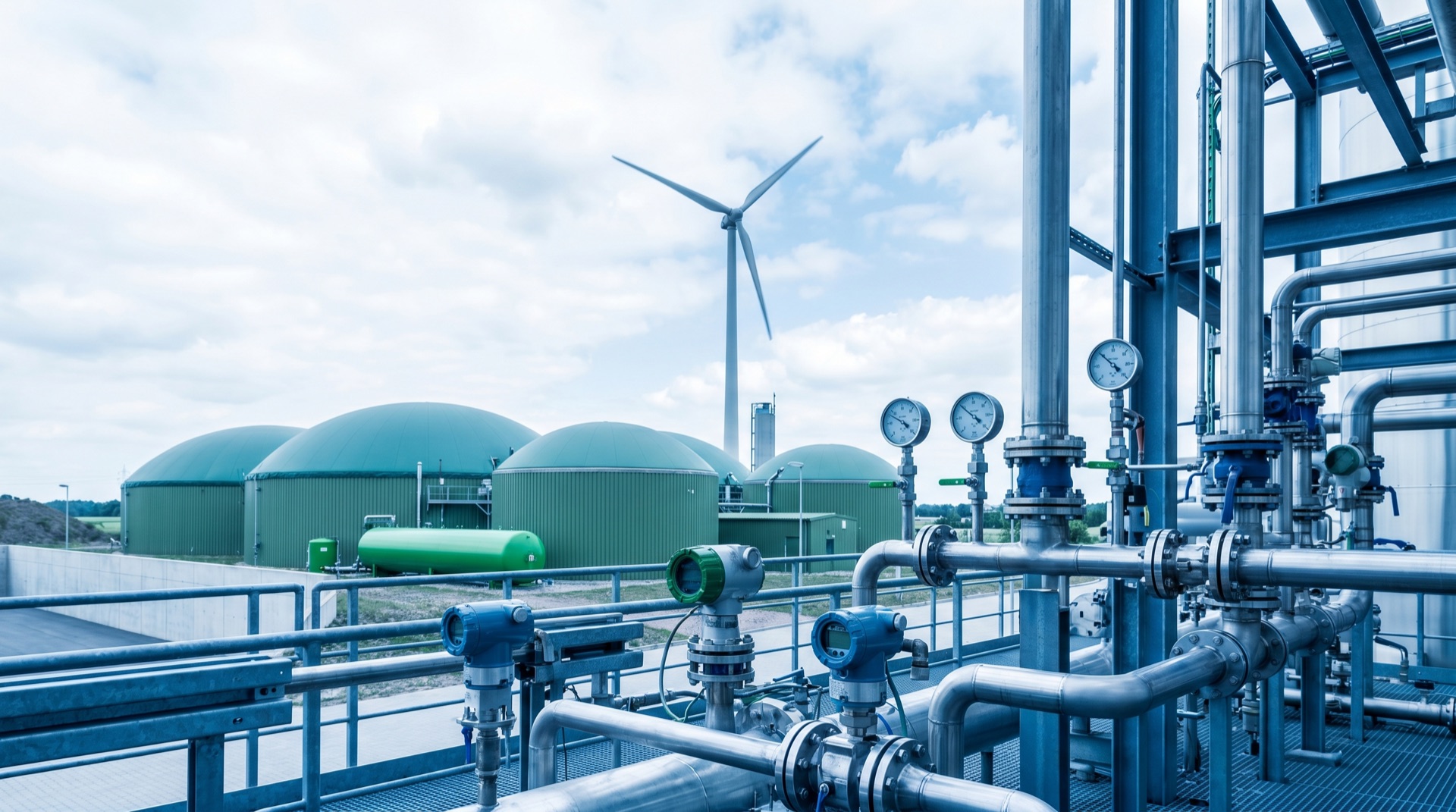
The table below summarizes how each parameter contributes to a working monitoring strategy and the typical instrument class involved.
| Parameter | What it reveals | Typical instrumentation |
|---|---|---|
| Gas composition (CH4, CO2, H2S, O2) | Process health, conversion efficiency, corrosion and cleaning load | Multi-channel biogas analyzer |
| Pressure | Vessel and membrane protection, gas storage balance | Low-range transmitters, over/under-pressure switches |
| Temperature | Mesophilic or thermophilic stability, heating control | RTD or thermocouple assemblies, transmitters |
| Level | Retention time, mixing, gas storage volume | Radar, ultrasonic or hydrostatic level devices |
| Gas flow | Production rate, batch progress, yield verification | Thermal mass or volumetric flow meters |
Quantifying how much gas a digester actually produces closes the loop on the whole system. Flow data confirms yield, validates the trends seen in composition, and supports energy accounting. Avensys offers dedicated biogas flow instrumentation suited to the often low pressures and saturated, corrosive conditions of digester gas. For research, pilot or trickle-feed applications where volumes are small, our guide to low flow gas metering with thermal mass, drum-type and milligas counters explains the specialized devices that handle very low flow rates accurately.
Choosing instruments for a fermenter is as much about the service environment as the measurement itself. Digester gas is wet, often laden with H2S, and can be present in hazardous-area zones, so materials of construction, condensate management and area classification all influence device selection. Sampling systems for analyzers must handle moisture and particulates without clogging, and every sensor needs an installation point that reflects real process conditions rather than a convenient nozzle.
Equally important is how the data is used. Signals from biogas fermenter instrumentation typically feed a PLC or SCADA platform, where alarms, trends and interlocks turn raw measurements into actionable control. A coherent design, in which analyzers, transmitters, flow meters and the control layer are specified to work together, avoids the integration gaps that plague piecemeal installations. This systems perspective is central to our instrumentation solutions and analytical solutions practices.
Because biogas plants live alongside regulatory expectations, monitoring data also supports compliance and reporting obligations under frameworks such as CEPA 1999, the National Pollutant Release Inventory and applicable provincial programs. The specific requirements vary by jurisdiction and facility, so operators should confirm details with the relevant authority and treat instrumentation as the foundation for whatever records and limits ultimately apply.
Fermenter monitoring is the continuous measurement of conditions inside an anaerobic digester, principally gas composition, pressure, temperature and level. It allows operators to keep the biological process within its stable operating window, detect upsets early, and maximize the conversion of feedstock into usable methane.
Most plants prioritize gas composition (methane, carbon dioxide, hydrogen sulphide and oxygen), headspace pressure, process temperature, and substrate level. Adding gas flow measurement completes the picture by quantifying actual production. Together these parameters give a reliable view of digester health and yield.
A batch fermenter is monitored mainly to track the gas production curve through a sealed cycle and to know when the charge has peaked or is spent. A continuously fed digester focuses on holding temperature, level and feed rate steady at a setpoint. The underlying measurements are the same, but the way the data is interpreted differs.
Yes. Multi-channel process gas analyzers, such as the Awite systems Avensys supplies, can sequence through several digesters and gas streams, so a single instrument can serve an entire site. This is often more economical and easier to maintain than installing a separate analyzer on every vessel.
Hydrogen sulphide is corrosive and can damage engines, piping and downstream equipment, and it adds load to gas-cleaning systems. Tracking H2S helps operators manage corrosion risk, schedule desulphurization, and protect combined heat and power assets, which is why it is a standard analyte in fermenter monitoring.
Avensys Solutions is a proud member of The Hoskin Group, supporting Canadian industry with instrumentation supply, technical service and systems integration.
Avensys Solutions helps biogas and green energy operators design, deploy and maintain reliable digester monitoring. Our value-added services cover the full lifecycle of an installation:
To build a robust approach to fermenter monitoring and the wider toolkit described across our process instrumentation for industrial and green energy applications guide, explore our Avensys services or contact our team to discuss your digesters.

Our goal is to offer broad capabilities, competitive pricing, exceptional quality and outstanding service to each and every customer across Canada.
A Division of The Hoskin Group. Canada’s Instrumentation Leader
©2026 Avensys · Powered by Canibuy™