A Division of The Hoskin Group. Canada’s Instrumentation Leader 


When a regulator asks you to demonstrate that your effluent meets permit limits, the laboratory result is only as defensible as the sample behind it. An automatic water sampler removes the largest source of uncertainty in compliance monitoring, human variability, by collecting samples on a precise schedule, in proportion to flow, and under conditions that preserve sample integrity from intake to laboratory. This guide explains how to choose between composite and grab sampling, when flow proportional sampling is the right approach, and how refrigerated, portable, and process samplers fit different municipal and industrial applications.
Automated sampling is one pillar of a complete monitoring program. For the broader picture, including flow, level, and analytical instrumentation, start with our complete guide to industrial water quality monitoring.
Municipal treatment plants, industrial dischargers, and collection-system operators in Canada sample under several overlapping frameworks: the federal Wastewater Systems Effluent Regulations under the Fisheries Act, reporting obligations connected to CEPA 1999 and the National Pollutant Release Inventory (NPRI), provincial permits and approvals, and municipal sewer-use bylaws. Each framework defines what must be sampled, how often, and frequently how, grab versus composite, time-paced versus flow-paced. Because requirements vary by jurisdiction and by permit, always confirm the exact sampling protocol with your regulatory authority before finalizing equipment selection.
Manual sampling can satisfy some of these obligations, but it scales poorly and introduces gaps a regulator may question. Automated samplers deliver:
These benefits apply across the water and wastewater sector as well as industrial pretreatment programs, and they form the sampling backbone of most environmental monitoring solutions.
A grab sample is a single volume collected at one moment. It is the right choice, and often the mandated one, for parameters that change quickly once the sample leaves the stream, such as pH, residual chlorine, dissolved gases, bacteria, and oil and grease. Grab samples are simple, but a single snapshot can badly misrepresent a discharge whose quality varies through the day.
A composite sample combines many small aliquots collected over a defined period, typically 24 hours, either into a single container or distributed across sequential bottles. A wastewater composite sampler is the standard tool for loading-based limits on parameters such as BOD/CBOD, total suspended solids, nutrients, and metals, because it averages out short-term variability and reflects what was actually discharged over the compliance period. Sequential-bottle configurations add a forensic layer: if an exceedance appears, time-stamped bottles help you trace when the slug arrived.
Most compliance programs use both: composites for loading parameters, grabs for unstable parameters. Your permit will specify which applies to each analyte, so verify before you program the sampler.
Once you have settled on composite sampling, the next decision is pacing.
Time-proportional sampling draws a fixed aliquot at fixed intervals, for example, every 15 minutes. It is simple to program and acceptable where flow is reasonably steady, but during a storm surge or a batch discharge it under-represents high-flow periods that carry most of the pollutant load.
Flow-proportional sampling paces the sampler from a flow meter, drawing an aliquot for every set volume of flow that passes. The resulting composite is weighted by actual discharge volume, which is why many permits for variable-flow facilities specify it. The trade-off is that the sampler is only as good as the flow measurement driving it. In sewers, channels, and flumes, that means pairing the sampler with a properly selected and maintained meter, our guides to open channel flow measurement and liquid flow meter selection cover those choices in detail. Where flow is inferred from level in a flume or weir, accurate level measurement matters just as much.
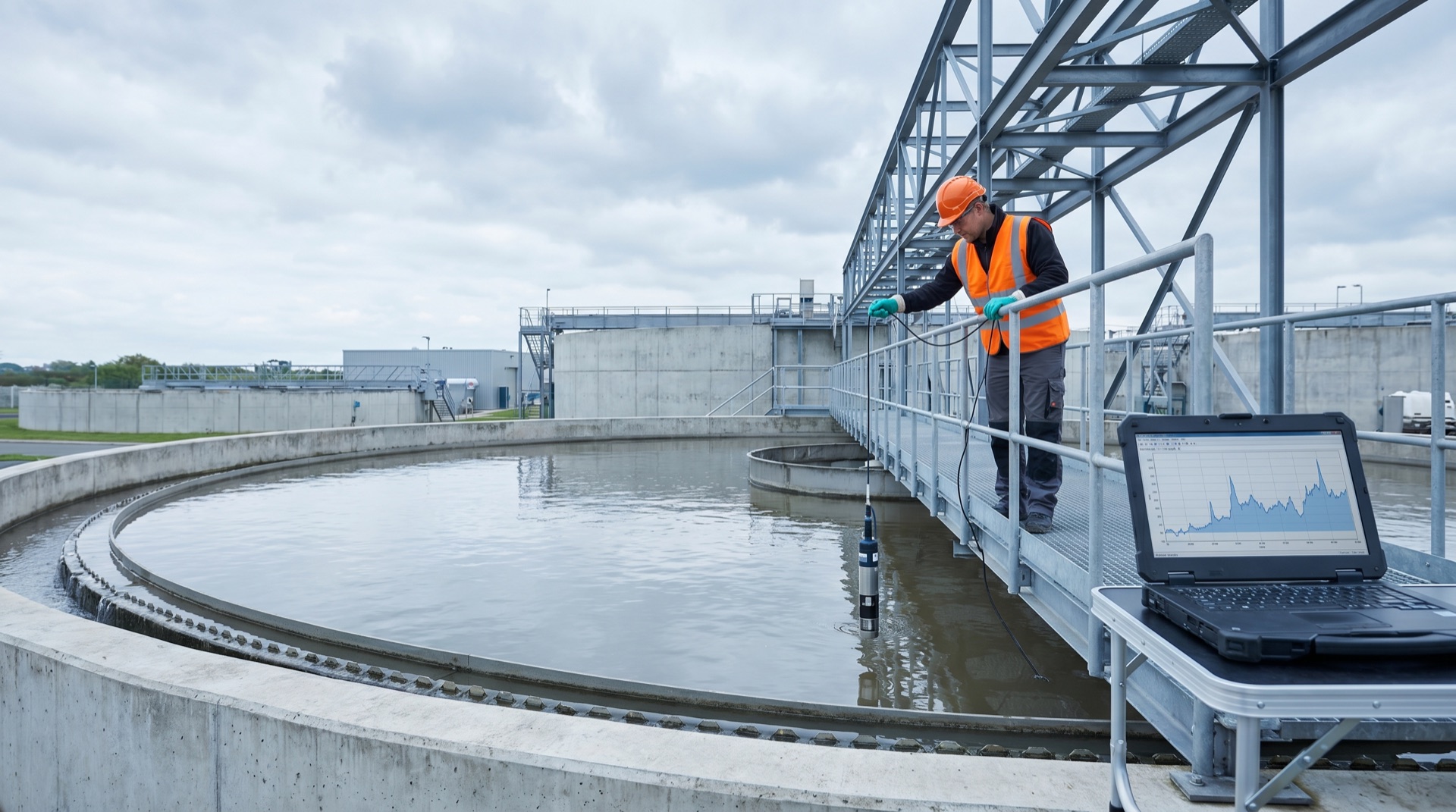
Modern automatic water samplers share a common architecture, a pump, a distributor, a controller, and a bottle configuration, but they are packaged for very different environments. The three main families are refrigerated, portable, and process samplers.
At treatment plant influent and effluent points, lift stations, and industrial outfalls with permanent power, refrigerated samplers are the default choice. Active cooling holds collected samples at preservation temperature throughout a 24-hour composite cycle, regardless of ambient conditions, a meaningful advantage through Canadian summers and in heated mechanical rooms. All-season enclosures, large bottle capacities, and integration with plant flow meters and SCADA make them the workhorse of long-term compliance monitoring.
Where there is no fixed power or the monitoring point moves, manholes, stormwater outfalls, sewer-use bylaw enforcement, inflow and infiltration studies, or short-term characterization ahead of a plant upgrade, compact, battery-powered portable samplers are the practical answer. They are built to be lowered into confined spaces, run on batteries for the duration of a sampling event, and rely on ice packs in an insulated base for sample cooling. Many accept the same flow-meter pacing inputs as their refrigerated counterparts, so flow-proportional composites are still achievable in the field.
Some streams cannot be sampled by dropping a suction line into an open channel: pressurized pipes, elevated temperatures, aggressive chemistry, or in-plant quality-control points all call for purpose-built process samplers. These units are engineered to draw representative samples directly from process lines and are common in industrial plants, pulp and paper mills, and chemical operations where both compliance and process-control sampling are needed.
| Consideration | Refrigerated Sampler | Portable Sampler | Process Sampler |
|---|---|---|---|
| Typical installation | Permanent station (plant influent/effluent, outfall) | Temporary or rotating sites (manholes, stormwater) | In-plant process lines |
| Power | Line power | Battery | Line power / process utilities |
| Sample cooling | Active refrigeration | Ice in insulated base | Application-dependent |
| Best suited to | Long-term regulatory compliance | Field studies, enforcement, I&I investigations | Pressurized or harsh process streams |
A sampler rarely works alone. Suction lines and strainers matched to the application, bottle and tubing kits, flow-meter interface cables, mounting hardware, and communication options all affect data quality and uptime, browse sampler accessories to complete a deployment. For sites that need sampling, flow measurement, and data logging working as one coordinated package, engineered sampling systems bring those elements together.
Avensys Solutions supplies samplers and sampling equipment from Teledyne ISCO, one of the most widely deployed names in compliance sampling, and supports them with selection guidance, integration, and after-sales service across Canada as part of its instrumentation offering.
A grab sample captures water quality at a single instant, while a composite sampler collects many small aliquots over a period, commonly 24 hours, and combines them into one representative sample. Composites are preferred for loading-based limits such as BOD and suspended solids; grabs are required for parameters that degrade quickly, such as pH and residual chlorine. Your permit dictates which method applies to each parameter.
Flow-proportional pacing is typically specified where discharge flow varies significantly, facilities with batch processes, wet-weather influence, or strong diurnal patterns, because it weights the composite by actual discharged volume. Requirements differ between federal regulations, provincial approvals, and municipal sewer-use bylaws, so confirm the pacing method named in your specific permit with the issuing authority.
If the station has line power and runs 24-hour composites year-round, a refrigerated sampler is usually the right choice because active cooling maintains sample preservation temperatures regardless of weather. Portable units with ice cooling can serve permanent points in a pinch, but they demand frequent ice changes and more site visits, which erodes the labour savings automation is meant to deliver.
Yes. Most portable samplers accept pacing pulses from a compatible open-channel flow meter or flow module, allowing true flow-proportional composite sampling in manholes and at stormwater outfalls. The key is selecting a flow measurement technology suited to the site hydraulics and keeping it calibrated.
Plan for intake strainers and suction line suited to the stream, the correct bottle configuration (single composite or sequential), flow-meter interface cabling for flow-paced programs, and, for portable deployments, batteries, chargers, and insulated bases. Spares for tubing and pump components keep scheduled maintenance from interrupting a compliance program.
Avensys Solutions is a proud member of The Hoskin Group, supporting Canadian industry with instrumentation supply, technical service and systems integration.
Selecting a sampler is only the first step; keeping it defensible through years of compliance reporting is where support matters. Avensys Solutions backs its sampling equipment with Field & In-House Service for maintenance, repair, and calibration, Integrated Systems Design to combine samplers, flow meters, and data systems into one coherent monitoring station, and Start-up & Commissioning so your program produces audit-ready data from day one. Learn more about Avensys value-added services or contact our team to discuss your application.
Ready to see how automated sampling fits alongside flow, level, and analytical measurement? Return to the full industrial water quality monitoring guide for the complete picture.

Our goal is to offer broad capabilities, competitive pricing, exceptional quality and outstanding service to each and every customer across Canada.
A Division of The Hoskin Group. Canada’s Instrumentation Leader
©2026 Avensys · Powered by Canibuy™