A Division of The Hoskin Group. Canada’s Instrumentation Leader 


Selecting the right liquid flow meters is one of the most consequential instrumentation decisions a plant makes. Flow data drives chemical dosing, pump control, mass balances, billing and the regulatory reporting at the heart of industrial water quality monitoring. Yet no single technology suits every line: an electromagnetic flow meter that excels on conductive effluent is the wrong choice for demineralized water, while an ultrasonic clamp-on flow meter can solve retrofit problems that a full-bore meter cannot.
This guide compares electromagnetic, ultrasonic (transit-time, Doppler and clamp-on), turbine and mechanical technologies so you can match the meter to the application. It draws on the full range of liquid flow meters that Avensys Solutions supplies and supports across Canada, with a focus on water, wastewater and pulp & paper service.
In water and wastewater treatment, flow measurement underpins everything from raw-water intake accounting to coagulant dosing and final effluent reporting. In pulp and paper mills, meters face a far harsher mix: fibrous stock, white water, coating chemicals and hot liquor lines. The wrong technology in these services drifts, plugs or fails outright, and the real cost is rarely the instrument itself. It is the off-spec dosing, the billing disputes and the compliance gaps that follow.
Regulatory drivers raise the stakes further. Mills reporting under the federal Pulp and Paper Effluent Regulations, and municipal or industrial dischargers operating under provincial permits and frameworks, are expected to demonstrate that effluent volumes are measured reliably and that instruments are verified. Because specific requirements vary by jurisdiction and permit, always confirm measurement and reporting obligations with the relevant authority; this guide addresses technology selection at a general level.
An electromagnetic flow meter (mag meter) applies Faraday’s law of induction: as a conductive liquid passes through a magnetic field, it generates a voltage proportional to its velocity. Because the flow tube is completely unobstructed and there are no moving parts, mag meters tolerate solids, fibre and sludge that would destroy a mechanical element.
Key strengths include:
The limitations are equally clear. The liquid must be electrically conductive, which rules out hydrocarbons, demineralized water and most non-aqueous solvents. Liner and electrode materials must be matched to the process chemistry, and the pipe must run full at the meter; a partially filled line will read incorrectly. Avensys carries a broad selection of electromagnetic flow meters, including full pipe flow meters from Badger Meter, a manufacturer widely specified in municipal and industrial water service.
Ultrasonic flow meters measure velocity acoustically. Two distinct measuring principles exist, and a clamp-on mounting option changes how either can be deployed.
Transit-time meters send ultrasonic pulses diagonally across the pipe in both directions. Sound travels faster with the flow than against it, and the difference in travel times is proportional to velocity. Transit-time technology performs best on clean to lightly loaded liquids such as potable water, condensate, filtrate and well-treated effluent, where the acoustic path stays clear. Accuracy is strong, there is no pressure drop, and nothing contacts the fluid in clamp-on configurations.
A Doppler ultrasonic flow meter takes the opposite approach: it depends on suspended solids or entrained gas bubbles to reflect the acoustic signal, and it measures the frequency shift of those reflections. That makes Doppler the ultrasonic option for dirty fluids, including mixed liquor, sludge lines and stock with entrained air, which are precisely the conditions where transit-time signals fade. The trade-off is generally lower accuracy, so Doppler meters are best applied to control and trending rather than billing-grade measurement.
An ultrasonic clamp-on flow meter mounts its transducers on the outside of the pipe, measuring flow without cutting into the line, shutting down the process or contacting the fluid. Clamp-on transit-time and Doppler designs are invaluable for retrofits, large-diameter mains, corrosive or hazardous fluids and temporary studies. Portable flow meters extend the same principle to verification work: spot-checking an installed meter, balancing flows between pump stations or quantifying lines that have never been metered. Pipe material, wall condition and internal lining all influence signal quality, so transducer placement and site selection deserve as much attention as the meter itself.
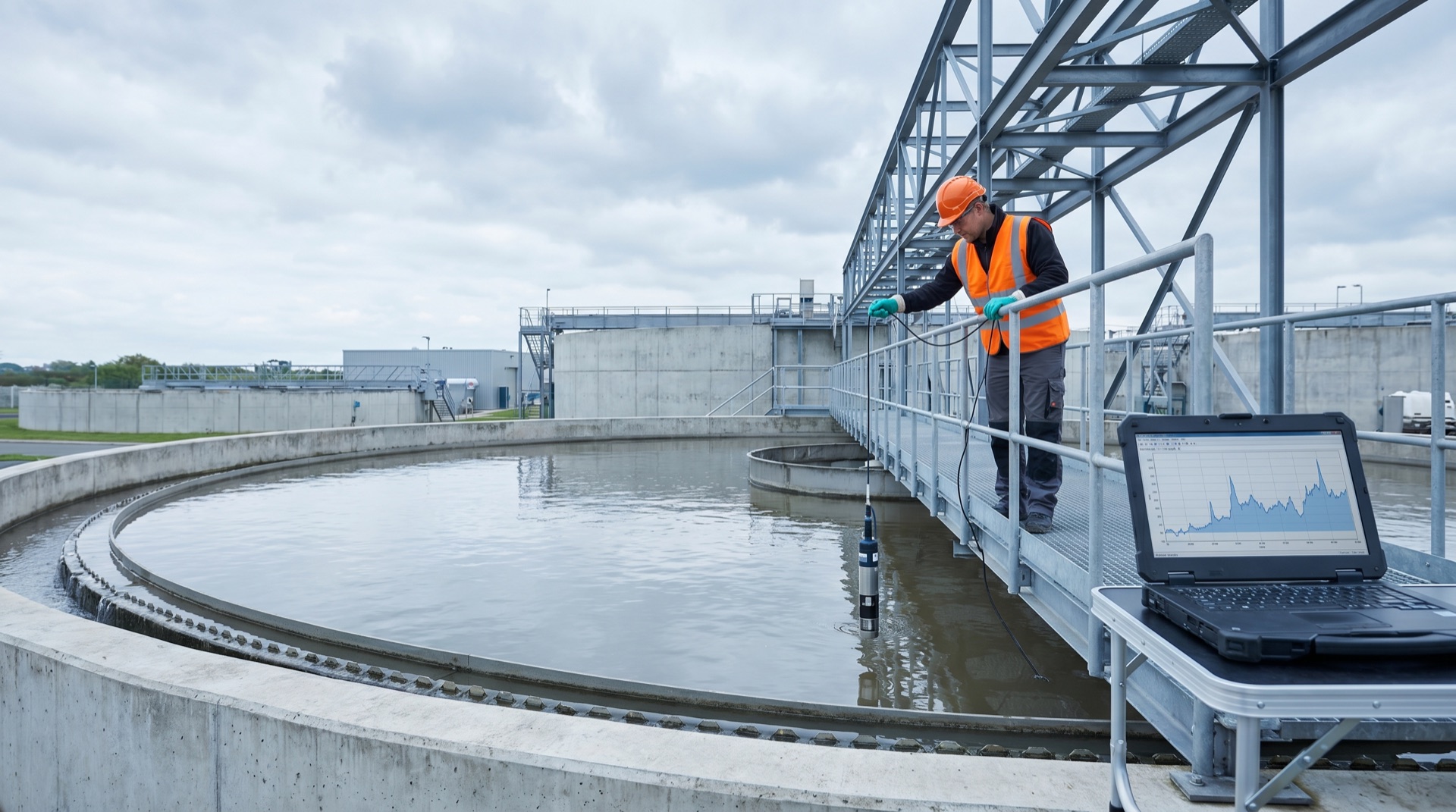
Mechanical technologies measure flow with moving elements, and they remain the right answer for specific jobs:
The shared caveat is wear. Suspended solids and fibre accelerate bearing and rotor wear dramatically, and upstream strainers add their own maintenance burden and pressure drop. In dirty or fibrous service, an electromagnetic or Doppler ultrasonic instrument is almost always the better long-term choice.
| Technology | Measuring principle | Best suited for | Watch out for |
|---|---|---|---|
| Electromagnetic | Faraday induction on conductive liquid | Wastewater, sludge, pulp stock, dosing, billing and compliance flows | Requires conductive fluid and a full pipe; liner/electrode compatibility |
| Transit-time ultrasonic | Difference in upstream/downstream pulse travel time | Clean water, condensate, filtrate, large mains, clamp-on retrofits | Signal loss with high solids or entrained air |
| Doppler ultrasonic | Frequency shift from particles or bubbles | Dirty fluids: mixed liquor, sludge, aerated stock | Needs reflectors in the fluid; lower accuracy than transit-time |
| Turbine | Rotor speed proportional to velocity | Clean, low-viscosity liquids; test stands; utility metering | Moving parts wear; intolerant of solids and fibre |
| Mechanical / positive displacement | Discrete volume capture or propeller rotation | Distribution metering, batching, simple totalization | Wear and pressure drop; unsuitable for dirty service |
A structured selection process avoids most field problems:
Flow rarely stands alone in a compliance program. Many permits pair flow totals with proportional sampling, covered in our guide to automated water sampling systems, and with tank or wet-well measurement, compared in our review of level measurement technologies. For help integrating all three into one measurement architecture, our team can advise on a complete instrumentation solution.
A transit-time meter measures the difference in travel time of pulses sent with and against the flow, and it needs a relatively clean liquid for the signal to cross the pipe. A Doppler ultrasonic flow meter measures the frequency shift of sound reflected off particles or bubbles, so it actually requires some solids or entrained gas to work. In short: clean liquid, choose transit-time; dirty liquid, choose Doppler.
On clean liquids with good piping conditions, a properly installed clamp-on transit-time meter can deliver accuracy suitable for most process and reporting purposes. An electromagnetic flow meter is generally the more accurate and more repeatable choice for conductive fluids, particularly for billing or compliance flows, because it is calibrated as a complete flow tube. Clamp-on wins where the line cannot be cut or the fluid must not be contacted.
Yes. Because the bore is unobstructed and the measurement does not depend on acoustic transparency or moving parts, mag meters are a standard choice for pulp stock, white water and sludge, provided the fluid is conductive and the liner and electrode materials suit the process. Proper grounding and a full pipe remain essential for stable readings.
Choose a turbine meter when the liquid is clean and low in viscosity, when fast response or compact installation matters, or when the fluid is non-conductive and a mag meter simply will not work. Avoid turbines wherever solids, fibre or aggressive scaling are present, since rotor and bearing wear will degrade accuracy.
For full conductive effluent lines, electromagnetic meters are the most common compliance choice thanks to their accuracy and stability. Transit-time ultrasonic meters suit clean final effluent and large outfall mains, while open channel methods apply to gravity discharges. Confirm any accuracy, calibration or verification requirements with your regulator, and document periodic checks, for example with a portable clamp-on reference meter.
Avensys Solutions is a proud member of The Hoskin Group, supporting Canadian industry with instrumentation supply, technical service and systems integration.
Avensys Solutions supplies and supports flow instrumentation for water, wastewater and pulp & paper operations across Canada, including Badger Meter full pipe flow technologies. More importantly, we back every meter with value-added services:
Explore our Avensys services or contact our team to discuss your application. Then continue building your measurement program with the complete industrial water quality monitoring guide, which connects flow measurement to sampling, level and analytical monitoring across your site.

Our goal is to offer broad capabilities, competitive pricing, exceptional quality and outstanding service to each and every customer across Canada.
A Division of The Hoskin Group. Canada’s Instrumentation Leader
©2026 Avensys · Powered by Canibuy™