A Division of The Hoskin Group. Canada’s Instrumentation Leader 


Open channel flow measurement is the practice of quantifying flow in conduits where the liquid surface is open to the atmosphere: sanitary and storm sewers, drainage channels, irrigation canals, effluent outfalls and treatment plant headworks. Because these conduits rarely run full, a conventional inline meter cannot do the job. Instead, operators pair hydraulic structures or velocity sensors with an open channel flow meter matched to the site. This guide, part of our complete guide to industrial water quality monitoring, compares the leading technologies, from ultrasonic level-based meters and area velocity flow meters to non-contact radar and primary devices such as the Parshall flume, and shares field-proven best practices for wastewater and stormwater applications across Canada.
Municipalities and industrial dischargers depend on accurate open channel flow data for several reasons:
These drivers span the entire water and wastewater industry, from collection systems to final effluent. Flow data also anchors composite sampling programs; see our companion guide to automated water sampling systems to learn how flow-proportional sampling strengthens compliance reporting.
The traditional approach installs a primary device, a flume or weir, that forces a known, repeatable relationship between the upstream liquid level (head) and the discharge. A level sensor measures the head, and the flow meter converts it to flow using the structure’s rating equation. Accuracy depends as much on the condition and installation of the primary device as on the electronics reading it.
An area velocity flow meter calculates flow as the product of the wetted cross-sectional area and the mean velocity (Q = A × V). A submerged sensor, or a non-contact sensor positioned above the flow, measures both level and velocity, so no flume or weir is required. That makes area velocity technology the practical choice in existing sewers, where constructing a hydraulic structure is disruptive or impossible, and in channels subject to backwater, surcharge or reverse flow conditions that would invalidate a stage-discharge rating.
A downward-facing ultrasonic transducer mounted above a flume or weir measures head without touching the liquid, and the meter computes discharge from the rating curve. The approach is well proven, economical and easy to maintain at treatment plants and permanent compliance points. Its limitations are environmental: foam, steam, wind and strong temperature gradients can disturb the acoustic path, and the transducer needs a rigid mount and an accurate zero reference. For a deeper look at how ultrasonic and radar level sensing compare, see our guide to level measurement technologies.
Submerged area velocity sensors typically use Doppler ultrasound to measure velocity, combined with a pressure or ultrasonic measurement for level. Mounted low in the pipe or channel, they deliver flow data in round sewers, egg-shaped conduits and natural channels, and keep reading through surcharged conditions. Teledyne ISCO area velocity instruments are a long-standing standard for both portable sewer studies and permanent outfall metering; browse our range of open channel flow meters to compare portable and fixed configurations.
Non-contact meters mount above the channel and measure surface velocity by radar while a companion sensor measures level; the instrument then derives mean velocity and computes flow. With no wetted parts, there is nothing to foul or corrode, which suits high-solids wastewater, corrosive industrial effluent and sites where confined-space entry for sensor maintenance is costly or hazardous. Explore non-contact flow meter options for installations where keeping sensors out of the flow is a priority.
The Parshall flume remains the most widely used primary device in North American wastewater service. Its converging throat accelerates the flow, producing a predictable head-discharge relationship while tolerating moderate solids and requiring relatively little head loss. Weirs (V-notch, rectangular and trapezoidal) are simple and perform well at low flows, but the upstream pool they create tends to trap solids, which makes them better suited to cleaner water. Correct sizing is critical: a flume selected only for peak flow can lose resolution at the low flows where most operating hours occur.
| Technology | How it measures | Best suited to | Key considerations |
|---|---|---|---|
| Ultrasonic level + flume/weir | Head over a primary device, converted via a rating curve | Treatment plant influent/effluent, permanent compliance points | Requires a correctly installed primary device; sensitive to foam, wind and temperature gradients |
| Area velocity (submerged Doppler) | Level and velocity measured directly; Q = A × V | Sewers, I&I studies, sites with backwater or surcharge | Sensor fouling requires periodic cleaning; site velocity profiling improves accuracy |
| Non-contact radar | Surface velocity and level measured from above the flow | Corrosive, high-solids or hard-to-access flows | Needs a measurable surface velocity; mounting alignment matters |
| Parshall flume (with any level sensor) | Hydraulic structure with a known head-discharge relationship | New construction, billing and compliance metering | Must be level, properly sized and kept free of debris and downstream submergence |
For permanent compliance points, many operators standardize on a multi-technology platform such as the Teledyne ISCO Signature flow meter, which supports multiple measurement techniques on one instrument and provides the secure data logging and reporting that auditors expect. And where flow can be routed through a continuously full pipe, a closed-pipe meter may be simpler; our comparison of electromagnetic, ultrasonic and mechanical liquid flow meters covers those options.
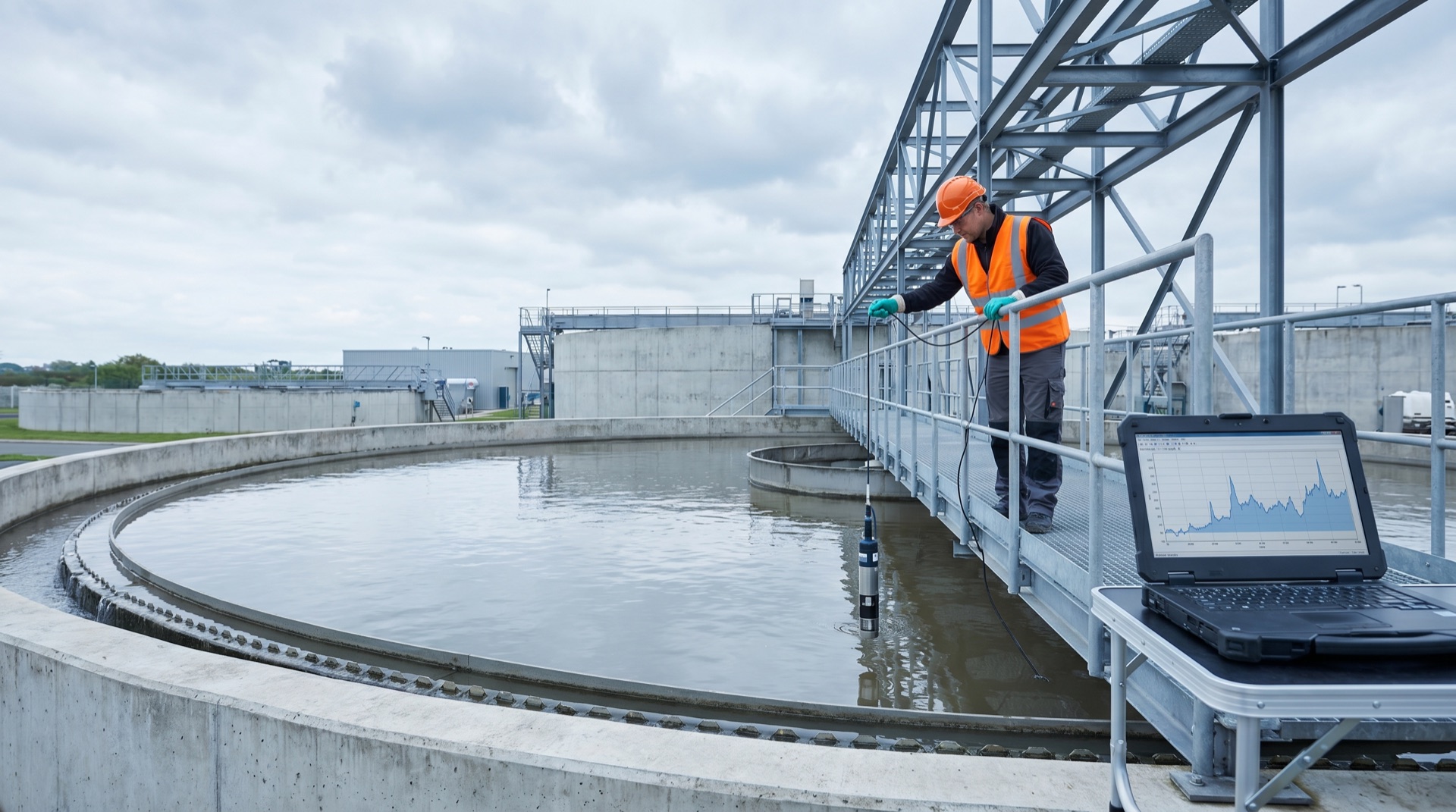
Wet weather is where open channel monitoring earns its keep, and where it gets hardest. Surcharged sewers, debris-laden flow and rapidly changing levels defeat simple stage-discharge installations. Portable area velocity meters are the workhorses of wet-weather characterization, while dedicated overflow monitors from MaidLabs are purpose-built to detect, time-stamp and estimate combined and sanitary sewer overflow events at regulators and outfalls. Pairing permanent overflow monitoring with periodic flow surveys gives utilities defensible records and the insight to prioritize collection-system investments. Avensys supports these programs through its environmental monitoring solutions portfolio.
An open channel flow meter is an instrument that measures flow in a conduit that is not completely full, such as a sewer, flume, channel or partially filled pipe. It determines flow either by measuring the liquid level over a hydraulic structure with a known rating, or by directly measuring level and velocity and computing flow as area times velocity.
An area velocity flow meter measures the liquid depth to calculate the wetted cross-sectional area, and measures velocity, typically with Doppler ultrasound or non-contact radar. Multiplying area by mean velocity yields the flow rate. Because no flume or weir is needed, area velocity meters are ideal for existing sewers and for sites with backwater or surcharged conditions.
Choose a Parshall flume when the flow carries solids, when head loss must be kept low, or when the structure must be self-cleaning, which is typical of wastewater. Weirs suit cleaner water and low flow rates, but the pool upstream of a weir traps sediment and requires more maintenance in dirty streams.
Yes. Non-contact installations combine a radar or ultrasonic level sensor with a radar surface-velocity sensor mounted above the channel, or use an ultrasonic level sensor over a flume or weir. Non-contact measurement eliminates sensor fouling and reduces confined-space entry, making it attractive for corrosive, high-solids or hazardous flows.
Accuracy depends on the whole installation: the condition of the primary device, the quality of the velocity profile at the site, sensor mounting, calibration and maintenance. A well-selected technology on a well-chosen site, verified periodically against independent measurements, delivers data suitable for billing and regulatory reporting; a poor site can undermine even the best meter.
Avensys Solutions is a proud member of The Hoskin Group, supporting Canadian industry with instrumentation supply, technical service and systems integration.
Avensys Solutions is a Canadian provider of environmental and industrial instrumentation. Our team supports Teledyne ISCO and MaidLabs flow monitoring equipment and backs every project with value-added services:
Explore our instrumentation services or contact our team to discuss your application with a flow measurement specialist.
This article is one chapter of our pillar resource on industrial water quality monitoring, where you will also find guides to automated sampling, closed-pipe flow metering and level measurement for water and wastewater facilities.

Our goal is to offer broad capabilities, competitive pricing, exceptional quality and outstanding service to each and every customer across Canada.
A Division of The Hoskin Group. Canada’s Instrumentation Leader
©2026 Avensys · Powered by Canibuy™